

Over 50 percent of American adults will experience significant loss at some point in their lives, yet many struggle to find grief support that truly fits their needs. The overwhelming choices and uncertainty around which steps to take can leave anyone feeling stuck or alone. This guide breaks down each stage of the journey, offering thoughtful strategies to help you identify your needs and find the right American grief therapist for your personal healing process.
Table of Contents
- Step 1: Assess Your Grief Support Needs
- Step 2: Research Qualified Grief Therapists
- Step 3: Compare Therapist Credentials And Approaches
- Step 4: Contact Prospective Therapists For Consultation
- Step 5: Evaluate Your Comfort And Connection
Quick Summary
| Key Point | Explanation |
|---|---|
| 1. Assess Your Grief Needs | Evaluate your emotional state to understand specific support needed for your grief journey. |
| 2. Research Qualified Therapists | Identify and explore mental health professionals specializing in grief counseling for effective support. |
| 3. Compare Credentials and Approaches | Evaluate therapists’ qualifications and therapeutic methodologies to find the best fit for your needs. |
| 4. Contact for Initial Consultation | Prepare a summary of your grief when reaching out to potential therapists for consultations. |
| 5. Evaluate Comfort and Connection | Ensure a strong therapeutic relationship by reflecting on comfort and emotional safety during sessions. |
Step 1: Assess Your Grief Support Needs
Assessing your grief support needs is a crucial first step in healing after experiencing significant loss. This process involves understanding your emotional landscape and recognizing what specific type of support will help you navigate through your grief journey.
Start by honestly evaluating your current emotional state and how the loss is impacting your daily functioning. Are you experiencing prolonged sadness, difficulty concentrating, sleep disruptions, or feeling overwhelmed? These can be indicators that professional grief support might be beneficial. Your emotional response is unique, and there is no “right” or “wrong” way to grieve. Some individuals process loss quickly, while others require more extended support.
Professional grief counselors recommend creating a personal grief inventory. Write down your primary emotional challenges and how they manifest in your life. Do you feel stuck in your grief, or are you struggling to return to normal activities? Understanding grief therapy can provide deeper insights into your specific support needs. Consider tracking your emotions for one to two weeks prior to seeking therapy, noting patterns, triggers, and intensity of your grief responses.
A helpful warning: Do not minimize your grief or feel pressured to “get over it” quickly. Grief is a complex, individual process that requires patience and compassionate self care. Professional support can help you develop healthy coping strategies and work through your emotional challenges at a pace that feels comfortable for you.
Step 2: Research Qualified Grief Therapists
Researching qualified grief therapists is a critical step in finding the right professional support for your healing journey. This process involves identifying mental health professionals who specialize in grief counseling and have demonstrated expertise in helping individuals navigate complex emotional landscapes.
Start by exploring professional directories and specialized networks that connect individuals with grief counseling experts. What is grief counseling can provide foundational insights into understanding the therapeutic approach. Utilize platforms like the Trauma Therapist Network and Zencare, which allow you to search for therapists based on location, specialization, and specific grief related experiences. Look for professionals who have specific credentials in grief counseling such as certification from recognized bereavement organizations or advanced training in trauma informed therapy.
When evaluating potential therapists, consider their professional background, therapeutic approach, and personal experience with grief counseling. Review their professional profiles, read client testimonials if available, and check their licensing status with state professional boards. Some key questions to ask during initial consultations include their experience with your specific type of loss, their therapeutic methodology, and how they approach individualized grief support.
A critical warning: Not all therapists are equally equipped to handle complex grief experiences. Trust your intuition and do not hesitate to schedule consultations with multiple professionals to find the right therapeutic match. Your healing journey is personal, and finding a therapist who understands your unique emotional landscape is paramount to effective grief counseling.
Step 3: Compare Therapist Credentials and Approaches
Comparing therapist credentials and approaches is a critical step in finding the right grief counseling professional who can effectively support your healing process. This stage requires careful evaluation of each therapist’s professional background, specialized training, and therapeutic methodology.

Begin by examining professional credentials thoroughly. Role of therapists provides essential context for understanding professional qualifications. Look for licensed mental health professionals with specific certifications in grief counseling, such as those from the Association for Death Education and Counseling or specialized trauma therapy training. Pay attention to their educational background, years of experience, and specific expertise in handling grief related trauma. The Mayo Clinic emphasizes the importance of selecting a therapist with appropriate diagnostic skills to address complicated grief effectively.
During your evaluation, request detailed information about their therapeutic approaches. Some therapists utilize cognitive behavioral therapy, while others might prefer narrative therapy or existential approaches to grief counseling. Ask specific questions about their treatment philosophy, typical session structures, and how they customize their approach to individual client needs. Consider requesting sample treatment plans or brief consultations to understand their methodology more deeply.
A critical warning: Not all credentials are equal. Advanced degrees do not automatically guarantee exceptional therapeutic skills. Trust your intuition and look beyond paper qualifications. A therapist who demonstrates genuine empathy, active listening skills, and a nuanced understanding of grief’s complex emotional landscape is often more valuable than someone with extensive but impersonal academic credentials.
Step 4: Contact Prospective Therapists for Consultation
Contacting prospective grief therapists requires strategic preparation and clear communication to ensure you find the most supportive professional for your healing journey. This critical step transforms your research into meaningful personal connection and potential therapeutic support.
How to prepare for counseling can provide valuable insights for your initial outreach. Begin by creating a concise summary of your grief experience and specific support needs. When reaching out, request a brief initial consultation which most therapists offer free of charge. Prepare a list of key questions about their experience with grief counseling, typical treatment approaches, session structures, and their philosophy around supporting clients through complex emotional landscapes. During initial communications, pay attention to their responsiveness, empathy, and willingness to understand your unique situation.
When scheduling consultations, be prepared to discuss your emotional needs transparently. Some therapists might offer phone or video consultations, which can help you assess their communication style and professional demeanor without immediate in person commitment. The Tragedy Assistance Program for Survivors recommends being direct about your expectations and comfort levels. Ask about their specific experience with your type of loss whether it involves death of a spouse, child, parent, or traumatic circumstances.
A critical warning: Trust your intuitive response during these initial interactions. A therapist might have excellent credentials but if you do not feel a sense of comfort or connection, it is perfectly acceptable to continue searching. Your emotional safety and comfort are paramount in the grief counseling process.
Step 5: Evaluate Your Comfort and Connection
Evaluating your comfort and connection with a grief therapist is a deeply personal and crucial step in your healing journey. This process requires honest self reflection and attentiveness to your emotional responses during initial interactions and therapy sessions.
Role of therapists highlights the importance of establishing a strong therapeutic relationship. Pay close attention to how comfortable you feel expressing vulnerable emotions during consultations. Notice subtle signals like the therapist’s listening style, their ability to validate your experiences, and whether you sense genuine empathy. A skilled grief counselor will create a safe space where you feel heard without judgment. Trust your intuition if something feels off. Your emotional safety matters more than maintaining politeness or avoiding potential awkwardness.
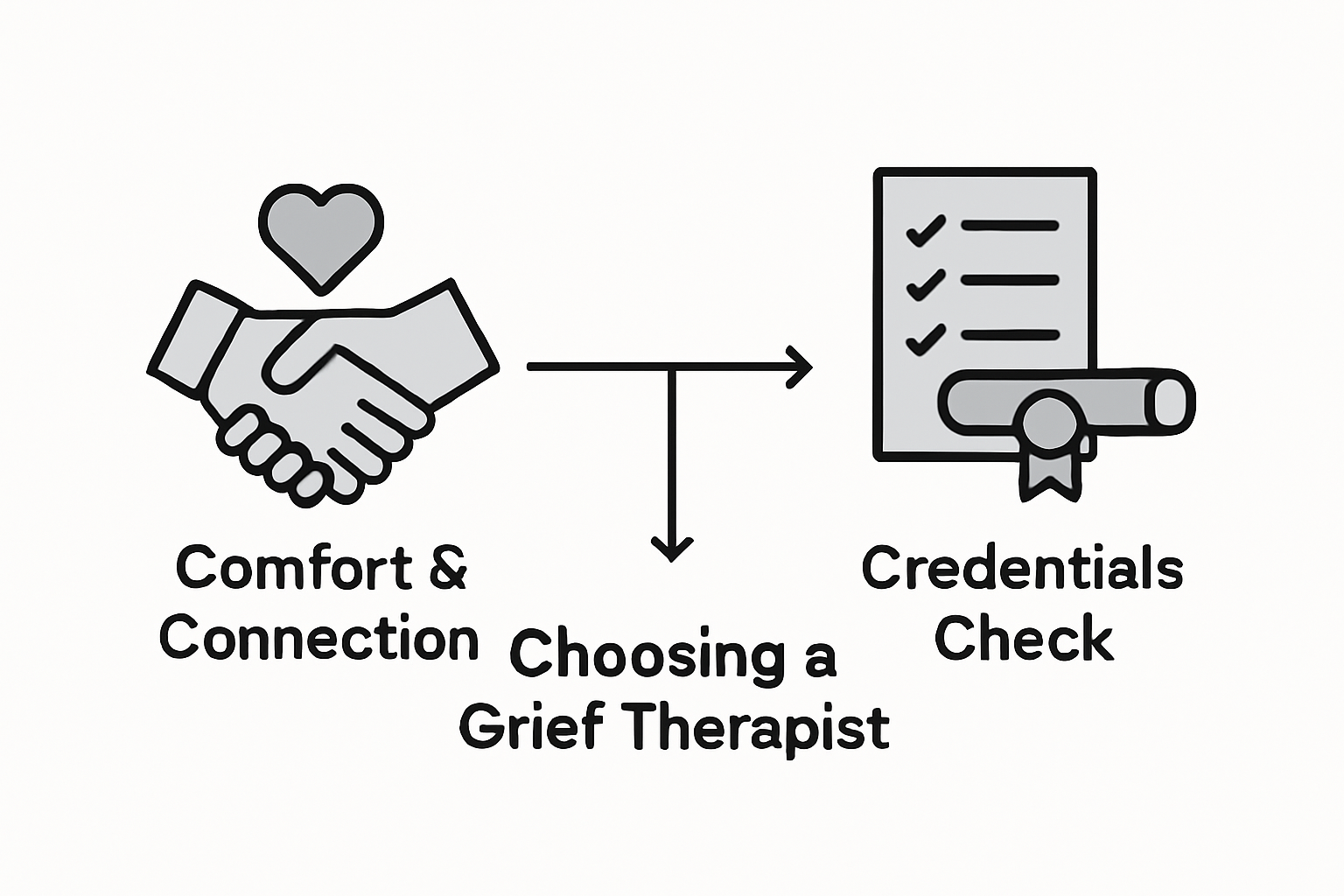
During initial sessions, assess the therapist’s communication approach. Do they ask thoughtful questions? Can they articulate how their therapeutic methods might support your specific grief experience? The Tragedy Assistance Program for Survivors recommends looking for professionals who demonstrate active listening skills and a nuanced understanding of grief’s complex emotional landscape. Consider keeping a brief journal after each consultation to track your emotional responses and comfort levels.
A critical warning: Healing requires vulnerability. If you consistently feel guarded or uncomfortable during sessions, it is absolutely acceptable to seek another therapist. Your emotional well being is the priority, and finding the right therapeutic match may take time and multiple consultations.
Find the Right Grief Support and Begin Healing Today
Navigating grief can feel overwhelming when you are unsure how to find a therapist who truly understands your unique emotional challenges. This guide highlights the importance of assessing your grief support needs, researching qualified grief therapists, and building a trusting connection that fosters healing. At Dr. Stephen Oreski & Associates, we recognize how vital personalized grief counseling is in moving forward from loss with compassion and respect.

Explore our specialized Grief Archives for expert insights and let our experienced team help you find a therapist suited to your needs. Don’t wait to start creating a safe space for your emotions. Visit https://bergencountytherapist.com today to schedule a free consultation and take the first step toward healing. You can also learn more about related topics in our bereavement Archives to support your journey.
Frequently Asked Questions
How do I assess my grief support needs before finding a therapist?
Assess your grief support needs by honestly evaluating your emotional state and how your loss affects your daily life. Write down your main emotional challenges and consider tracking your feelings over a week to identify patterns before seeking therapy.
What qualifications should I look for in a grief therapist?
Look for grief therapists who have specific certifications in grief counseling, such as those from recognized bereavement organizations. Check their educational background and years of experience to ensure they are equipped to handle complex grief situations.
How can I contact prospective grief therapists?
You can contact prospective grief therapists by preparing a brief summary of your grief experience and specific support needs. Request an initial consultation, which is often provided for free, and be ready to discuss what you need from therapy during this meeting.
What should I evaluate during my first meeting with a grief therapist?
During your first meeting, evaluate how comfortable you feel discussing your emotions and whether the therapist demonstrates empathy and understanding. Take note of their listening style and how they ask questions to support your specific grief experience.
How do I know if a therapist is the right fit for my grief journey?
You’ll know a therapist is the right fit if you feel comfortable sharing your emotions and sense a genuine connection. Trust your intuition; if you feel guarded or uncomfortable, it’s completely acceptable to seek another therapist.
Recommended
- What Is Grief Counseling? Complete Expert Guide – Dr. Stephen Oreski & Associates
- Understanding Grief Therapy: Healing Through Loss – Dr. Stephen Oreski & Associates
- Coping With Grief Through Meditation – Dr. Stephen Oreski & Associates
- Grief Counseling NJ | Bergen County Therapy & Counseling | Paramus NJ
- Training Therapy Dogs: A Complete 2025 Guide for Owners and Handlers – iPupPee