

Choosing family therapy in Bergen County can feel overwhelming when you’re facing communication breakdowns or ongoing conflict. Multiple therapy types promise results, but which one truly fits your family’s needs? Understanding the distinctions between structural, strategic, and other approaches helps you make confident decisions. This guide breaks down the most effective family therapy types so you can select the method that strengthens your relationships and resolves the challenges your family faces right now.
Table of Contents
- How To Choose The Right Family Therapy: Key Selection Criteria
- Structural Family Therapy
- Strategic Family Therapy
- Comparing Family Therapy Types: Which Fits Your Needs?
- Situational Recommendations For Bergen County Families
- Explore Expert Family Therapy In Bergen County
Key takeaways
| Point | Details |
|---|---|
| Therapy selection depends on specific family challenges and goals | Different approaches address boundary issues, communication crises, or long-term relational patterns |
| Structural and Strategic therapies deliver faster conflict resolution | These directive methods typically show results within 6-12 sessions |
| Bowenian and Narrative therapies build deeper relational understanding | Insight-oriented approaches require longer commitment but create lasting change |
| Session length and format affect practical feasibility | Treatment ranges from 6 sessions to 20+ depending on the approach and family situation |
| Bergen County families can access both in-person and telehealth options | Flexible formats increase accessibility and accommodate diverse schedules |
How to choose the right family therapy: key selection criteria
Before exploring specific therapy types, you need clear criteria to evaluate which approach matches your family’s situation. Your therapeutic goals form the foundation of this decision. Some families need immediate conflict resolution after a crisis, while others seek long-term growth and deeper understanding of relational patterns.
Session length and affordability directly affect your ability to commit. Short-term therapies typically span 6-12 sessions, making them more accessible for families with budget constraints or scheduling challenges. Long-term approaches may require 20 or more sessions but offer comprehensive transformation of family dynamics.
Accessibility includes both location and format. Telehealth has become an important factor in therapy accessibility, especially for Bergen County families balancing work, school, and other commitments. Online therapy for families provides flexibility without sacrificing effectiveness.
Therapy style matters significantly in how your family experiences treatment. Consider these distinctions:
- Directive approaches provide structured guidance and specific interventions
- Insight-oriented methods explore underlying patterns and emotional dynamics
- Problem-focused therapies target immediate symptoms and behaviors
- Process-oriented approaches examine communication styles and relationship quality
Matching therapy type to your family’s dynamics improves success rates dramatically. A blended family struggling with boundary confusion needs different interventions than an intact family experiencing communication breakdowns. Parents and teens in constant conflict benefit from approaches distinct from those helping couples navigate parenting disagreements.
Pro Tip: Schedule initial consultations with therapists trained in multiple modalities. This lets you discuss your specific situation and receive professional recommendations before committing to a particular approach. Many family therapy options in Bergen County offer free consultations.
Your family systems therapy guide Bergen County resources can help you understand how different approaches view family functioning. Some therapies see families as organized systems requiring structural adjustment, while others focus on problem-solving strategies or narrative reconstruction. Choosing the right therapy requires understanding these philosophical differences alongside practical considerations.
Structural family therapy
Structural Family Therapy focuses on reorganizing how your family operates as a system. Developed by Salvador Minuchin, this approach views family problems as resulting from dysfunctional organizational patterns rather than individual pathology. The therapist actively works to restructure boundaries, hierarchies, and subsystems within your family.
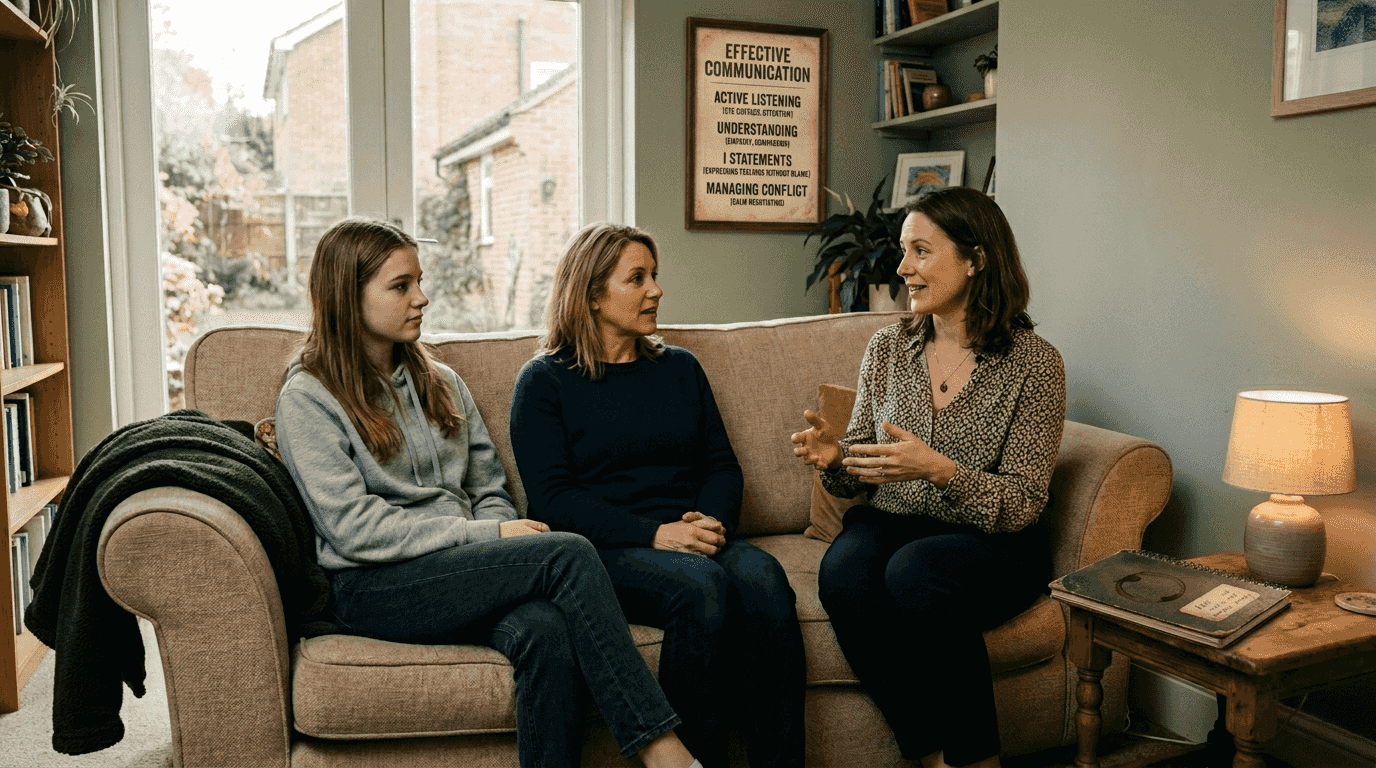
This therapy excels when families struggle with boundary confusion or hierarchy dysfunction. Parents unable to maintain consistent authority, children triangulated into adult conflicts, or blended families with unclear role definitions see substantial improvement. The therapist joins your family system temporarily to map its structure, then guides strategic interventions to create healthier organizational patterns.
Structural Family Therapy shows 70-80% improvement in family functioning in controlled studies. This evidence base makes it one of the most trusted approaches in clinical settings. Treatment typically requires 12-20 sessions as families practice new interaction patterns and solidify structural changes.
Key components include:
- Boundary making to clarify appropriate separations between family members
- Hierarchy adjustment to restore parental authority and appropriate roles
- Subsystem strengthening to support healthy coalitions like the parental team
- Enactment techniques where families demonstrate problems in session for real-time intervention
Structural therapy works particularly well for families needing clear role definitions and system adjustments. If your teenagers ignore parental rules, family members intrude on each other’s privacy, or you struggle to maintain consistent discipline, this approach provides concrete solutions.
Structural Family Therapy treats the family as an organized system where changing the structure changes individual behavior. This systems perspective offers powerful leverage for lasting change.
The directive nature of structural therapy means your therapist takes an active role in sessions. Rather than simply facilitating discussion, they orchestrate interactions, suggest seating arrangements, and assign homework to shift family organization. This hands-on approach appeals to families wanting clear guidance and measurable progress.
Family systems therapy guides in Bergen County often incorporate structural techniques because of their proven effectiveness. The approach’s emphasis on present-moment interaction rather than historical exploration makes it efficient for families seeking practical solutions. Family therapy options frequently include structural methods as a first-line treatment for organizational dysfunction.
Strategic family therapy
Strategic Family Therapy takes a problem-solving, goal-focused approach to family intervention. Unlike insight-oriented methods, strategic therapy prioritizes resolving specific symptoms and behavioral patterns through directive techniques. The therapist designs strategic interventions tailored to interrupt problematic interaction cycles without requiring families to understand underlying causes.
This approach proves especially effective for acute behavioral and communication issues. Strategic Family Therapy achieves up to 65% symptom reduction within 12 sessions, making it ideal for families facing immediate crises. Treatment typically lasts 6-12 sessions, offering rapid relief for urgent problems.
Strategic therapy excels in these situations:
- Adolescent behavioral problems requiring immediate intervention
- Communication deadlocks where family members feel stuck
- Power struggles between parents and children
- Acute crises following major life transitions
The strategic approach follows this typical sequence:
- Precisely define the presenting problem in behavioral terms
- Analyze the interaction sequences maintaining the problem
- Design strategic interventions to disrupt problematic patterns
- Implement directives and paradoxical techniques
- Evaluate outcomes and adjust strategies accordingly
- Consolidate gains and prepare for termination
Therapists using strategic methods often assign tasks that seem counterintuitive. These paradoxical interventions create change by prescribing the symptom or reframing the problem in unexpected ways. For example, a therapist might instruct arguing parents to schedule daily arguments, which often reduces spontaneous conflict.
Rapid symptom reduction often appears within the first three months of strategic therapy. This quick timeline appeals to families wanting immediate relief from distressing problems. The focus on observable behavior change rather than emotional insight means progress feels tangible and measurable.
Strategic therapy works best when families need quick results for specific problems. If your family faces an immediate crisis, communication has completely broken down, or behavioral issues demand urgent attention, this directive approach delivers focused solutions. The time-limited nature also suits families with scheduling or financial constraints.
Pro Tip: Strategic therapy’s brief timeline makes it excellent for testing whether family therapy helps before committing to longer-term approaches. Many Bergen County families start here to address urgent issues, then transition to insight-oriented methods for deeper work.
Family therapy options in Bergen County frequently include strategic approaches for their efficiency and proven results. When you’re rebuilding trust after conflict, strategic interventions provide the structure needed to break destructive cycles quickly.
Comparing family therapy types: which fits your needs?
Selecting the right family therapy requires understanding how different approaches compare across key dimensions. This practical comparison helps you match therapy characteristics to your family’s specific situation and priorities.
| Therapy Type | Orientation | Typical Sessions | Best For | Primary Focus |
|---|---|---|---|---|
| Structural | Directive | 12-20 | Boundary confusion, hierarchy problems, blended families | Reorganizing family structure and roles |
| Strategic | Directive | 6-12 | Acute behavioral crises, communication deadlocks | Problem-solving and symptom reduction |
| Bowenian | Insight | 20+ | Chronic anxiety, differentiation issues, multigenerational patterns | Understanding emotional systems and self-development |
| Narrative | Insight | 15-25 | Identity conflicts, trauma recovery, externalizing problems | Rewriting family stories and meaning |
| Solution-Focused | Directive | 6-10 | Goal achievement, building on strengths, brief intervention needs | Identifying and amplifying what works |
Directive therapies like Structural and Strategic provide clear guidance and structured interventions. The therapist takes an active role in designing change strategies and directing family interactions. These approaches reduce conflict faster because they target specific behavioral patterns without requiring deep psychological exploration.
Insight-oriented methods like Bowenian and Narrative therapy foster relational depth and self-awareness. Families explore emotional patterns, family-of-origin influences, and the meanings they attach to experiences. This deeper work creates lasting transformation but requires longer commitment and more sessions.
Session length differences significantly impact practical feasibility. Solution-Focused therapy’s 6-10 sessions suit families with limited time or resources. Bowenian therapy’s 20+ sessions demand substantial commitment but offer comprehensive understanding of multigenerational patterns affecting current relationships.
Therapies emphasizing rapid symptom relief prioritize observable behavior change. Strategic and Solution-Focused approaches target what’s not working and implement quick solutions. Structural therapy occupies a middle ground, restructuring family organization while producing measurable changes within a moderate timeframe.
Approaches building relational depth invest time in understanding underlying dynamics. Narrative therapy helps families rewrite problematic stories and develop new identities. Bowenian work focuses on differentiation, helping family members maintain connection while developing healthy autonomy.
Your urgency level should guide this decision. Families in crisis benefit from directive, short-term approaches that stabilize the situation quickly. Those seeking fundamental transformation of relationship patterns need insight-oriented methods despite the longer timeline.
Consider how your family responds to authority and structure. Some families thrive with directive guidance and appreciate specific homework assignments. Others resist feeling told what to do and prefer exploratory approaches that honor their own insights and solutions.
Choosing the right therapy means balancing these factors against your family’s values, goals, and practical constraints. Family therapy options in Bergen County span this full range, giving you access to the approach that truly fits your needs.
Situational recommendations for Bergen County families
Your family’s specific situation determines which therapy type delivers the best results. These tailored recommendations help Bergen County families match their circumstances to the most effective approach.
Blended families navigating stepfamily dynamics benefit most from Structural or Strategic approaches. These families need clear boundaries, defined roles, and reduced conflict around authority. Structural therapy reorganizes the system to accommodate new members and establish appropriate hierarchies. Strategic methods quickly address behavioral problems that often emerge during family transitions.
Acute communication crises require immediate intervention before patterns solidify. Strategic or Solution-Focused therapy provides the rapid relief needed when family members have stopped talking effectively. These approaches break destructive cycles quickly, restoring basic communication so deeper work becomes possible.
Long-term relational growth fits families ready to explore underlying patterns and emotional dynamics. Bowenian therapy helps when anxiety, fusion, or differentiation issues run across generations. Narrative approaches work beautifully for families wanting to reshape their identity and meaning-making after trauma or major transitions.
Solution-Focused therapy offers exceptional flexibility through telehealth formats. This approach’s structured, goal-oriented nature translates well to video sessions. Bergen County families with demanding schedules find online therapy for families removes transportation barriers while maintaining effectiveness.
Practical considerations significantly impact therapy success:
- Family schedules may require evening or weekend appointments
- Budget constraints favor shorter-term directive approaches
- Geographic distance from therapist offices increases telehealth appeal
- Family member resistance suggests collaborative, non-directive methods
- Cultural values affect receptiveness to different therapeutic styles
Pro Tip: Many families benefit from sequential approaches. Start with brief Strategic or Solution-Focused therapy to stabilize a crisis, then transition to insight-oriented work for lasting change. This staged approach manages costs while addressing both immediate and long-term needs.
Teenagers often respond better to therapies that don’t pathologize them. Narrative therapy’s practice of externalizing problems helps adolescents separate their identity from their struggles. Solution-Focused methods appeal to teens by emphasizing their strengths and involving them in goal-setting rather than problem analysis.
Younger children benefit when therapy includes play and activity-based interventions. Many structural and strategic therapists incorporate these techniques naturally. The directive nature of these approaches also provides the clear structure and boundaries that help children feel secure.
Divorced or separated parents needing co-parenting support require approaches focusing on practical collaboration rather than emotional processing. Strategic and Solution-Focused therapies keep sessions productive and goal-oriented, reducing the likelihood of rehashing relationship conflicts unrelated to parenting.
Family therapy options in Bergen County accommodate these diverse needs through therapists trained in multiple modalities. The key is matching your specific situation to the approach most likely to produce the outcomes you need within your practical constraints.
Explore expert family therapy in Bergen County
Understanding family therapy types helps, but finding the right therapist transforms knowledge into real change. Dr. Stephen Oreski & Associates offer diverse family therapy options in Bergen County tailored to your family’s unique challenges.
Professional assessment determines which therapy type fits your situation best. During an initial consultation, experienced therapists evaluate your family dynamics, goals, and constraints to recommend the most effective approach. This personalized matching process increases your chances of successful outcomes.
Both in-person and online therapy for families provide convenient access to evidence-based treatment. Whether you prefer face-to-face sessions or need the flexibility of telehealth, Bergen County families find options that accommodate their schedules and preferences.
Comprehensive resources guide your therapy journey from selection through completion. Practical therapy selection tips help you ask the right questions and set appropriate expectations. Experienced clinicians support lasting positive change by adapting treatment as your family’s needs evolve.
FAQ
What are the main differences between directive and insight-oriented family therapies?
Directive therapies like Strategic and Structural approaches focus on solving immediate problems through structured interventions and therapist guidance. Insight-oriented methods such as Bowenian and Narrative therapies explore underlying family dynamics and emotional patterns to create long-term change through increased self-awareness.
How long does family therapy usually last depending on the type?
Treatment length varies significantly by approach. Solution-Focused therapy typically requires 6-10 sessions, Strategic methods span 6-12 sessions, while Structural therapy needs 12-20 sessions. Insight-oriented approaches like Bowenian therapy often extend beyond 20 sessions to address deeper relational patterns.
Can family therapy be done effectively online in Bergen County?
Telehealth has become widely accepted as an effective format for family therapy, with research supporting its outcomes. Many Bergen County therapists offer online therapy for families that delivers comparable results to in-person treatment while improving accessibility for busy schedules.
Which family therapy type works best for blended families?
Structural Family Therapy proves most effective for blended families because it directly addresses boundary confusion and hierarchy problems common in stepfamilies. Strategic therapy also helps by quickly resolving specific behavioral conflicts that arise during family restructuring and adjustment periods.
How do I know if my family needs short-term or long-term therapy?
Consider your situation’s urgency and goals. Acute crises, specific behavioral problems, or immediate communication breakdowns suit short-term approaches like Strategic or Solution-Focused therapy. Long-term therapy fits when you want to understand multigenerational patterns, improve differentiation, or fundamentally transform relationship dynamics beyond symptom relief.