

Nearly 40 million American adults face anxiety disorders every year, making these conditions one of the most common mental health challenges in the United States. With persistent worry disrupting daily routines, countless individuals seek effective therapy options that actually work. Understanding the major therapy modalities can help you navigate choices confidently, offering insight into treatments that address unique symptoms, emotional triggers, and personal needs.
Table of Contents
- Defining Anxiety Therapy Modalities
- Core Evidence‑Based Talk Therapies
- Mindfulness And Acceptance‑Based Approaches
- Trauma‑Focused And Exposure Therapies
- Creative, Body‑Based, And Tech‑Enhanced Options
Key Takeaways
| Point | Details |
|---|---|
| Comprehensive Understanding of Anxiety | Anxiety therapy encompasses various modalities aimed at treating complex emotional experiences, addressing both symptoms and underlying psychological mechanisms. |
| Evidence-Based Talk Therapies | Structured, scientifically validated talk therapies, such as Cognitive Behavioral Therapy and Acceptance and Commitment Therapy, empower individuals to develop healthier emotional strategies. |
| Mindfulness and Acceptance Approaches | These therapies encourage individuals to observe their thoughts and feelings non-judgmentally, enhancing emotional regulation and psychological resilience. |
| Innovative Therapeutic Approaches | Alternative options, including body-based therapies and technology-enhanced interventions, provide holistic pathways to emotional wellness, integrating mind, body, and tech. |
Defining anxiety therapy modalities
Anxiety therapy represents a comprehensive approach to understanding and treating complex emotional experiences that extend far beyond typical stress responses. Anxiety disorders are psychological conditions characterized by persistent, excessive worry that interferes with daily functioning, impacting approximately 40 million American adults annually. Mental health professionals utilize multiple therapeutic modalities to address these nuanced emotional challenges, each designed to target specific psychological mechanisms underlying anxiety symptoms.
The types of anxiety disorders range from generalized anxiety to specific phobias, panic disorders, and social anxiety. Therapeutic approaches consequently vary based on individual symptoms, psychological history, and specific disorder characteristics. Clinicians typically employ evidence-based strategies that help patients understand their anxiety triggers, develop coping mechanisms, and gradually reshape negative thought patterns.
Modern anxiety therapy integrates multiple perspectives, drawing from psychological research that demonstrates the interconnected nature of emotional experiences. The Tripartite Model of Anxiety and Depression provides crucial insights by categorizing symptoms into three key domains: negative affect, positive affect, and physiological hyperarousal. This framework allows therapists to design targeted interventions that address not just surface-level symptoms, but underlying emotional and neurological processes that contribute to anxiety.
Effective anxiety therapy generally involves a combination of therapeutic techniques, which might include:
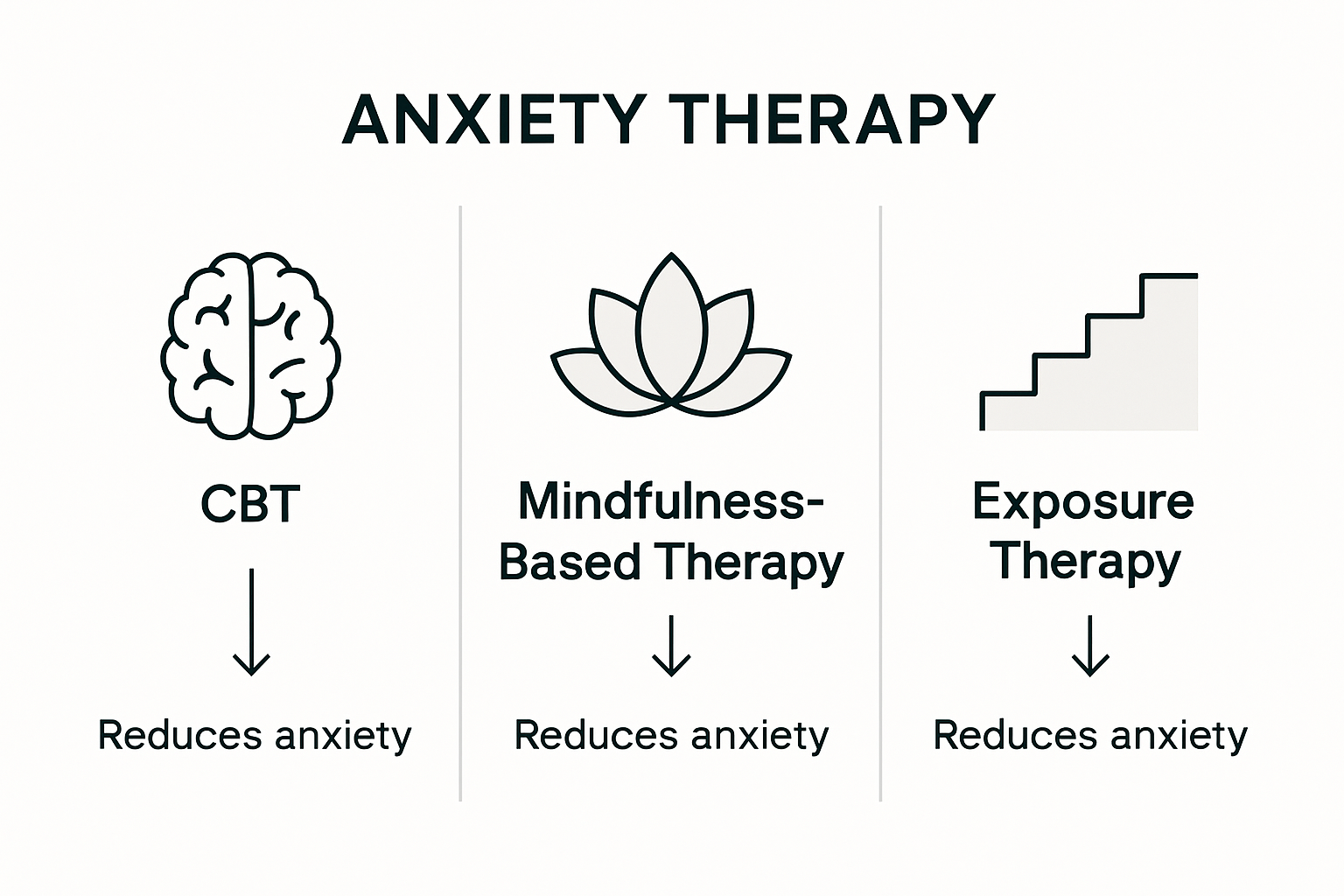
- Cognitive Behavioral Therapy (CBT): Helps patients identify and restructure negative thought patterns
- Exposure Therapy: Gradually desensitizes individuals to anxiety-provoking stimuli
- Mindfulness-Based Interventions: Teaches present-moment awareness and emotional regulation
- Psychodynamic Approaches: Explores unconscious emotional conflicts contributing to anxiety
- Medication Management: Used in conjunction with psychological interventions when appropriate
Understanding these modalities empowers individuals to make informed decisions about their mental health treatment, recognizing that anxiety management is a personalized journey requiring professional guidance and compassionate support.
Core evidence‑based talk therapies
Evidence‑based talk therapies represent scientifically validated psychological interventions designed to address mental health challenges through structured, intentional dialogue and therapeutic techniques. These approaches rely on extensive clinical research demonstrating their effectiveness in treating various psychological conditions, particularly anxiety and related disorders. By combining empirical research with compassionate clinical practice, therapists can offer targeted interventions that help patients understand and transform their emotional experiences.
Cognitive Behavioral Therapy (CBT) stands as the cornerstone of modern talk therapy, offering a systematic approach to understanding cognitive patterns. This therapeutic method focuses on identifying and restructuring negative thought patterns that contribute to anxiety, depression, and other mental health challenges. CBT operates on the fundamental premise that our thoughts, feelings, and behaviors are interconnected, and by changing maladaptive thinking processes, individuals can significantly improve their emotional well‑being.

Other prominent evidence‑based talk therapies include Dialectical Behavior Therapy (DBT), which emerged from CBT principles and specializes in emotional regulation for individuals experiencing intense emotional responses. Acceptance and Commitment Therapy (ACT) represents another powerful approach, emphasizing psychological flexibility and teaching patients to accept challenging emotions while committing to value‑driven behavioral changes. These therapeutic modalities share a common goal: empowering individuals to develop healthier cognitive and emotional strategies.
Key characteristics of evidence‑based talk therapies include:
- Structured Approach: Clear treatment protocols with measurable outcomes
- Empirical Validation: Supported by rigorous scientific research
- Targeted Interventions: Specific techniques for different psychological challenges
- Patient Collaboration: Active participation and skill‑building
- Measurable Progress: Quantifiable improvements in mental health
Ultimately, these therapeutic approaches represent more than just conversational techniques. They are sophisticated, research‑driven tools that help individuals navigate complex emotional landscapes, providing hope and practical strategies for sustainable psychological wellness.
Mindfulness and acceptance‑based approaches
Mindfulness and acceptance‑based therapies represent innovative psychological approaches that fundamentally transform how individuals interact with their emotional experiences. Unlike traditional therapeutic methods that focus on eliminating or controlling negative emotions, these approaches teach individuals to observe their thoughts and feelings with curiosity, compassion, and non‑judgment. By learning to regulate emotional responses, patients develop powerful psychological skills that promote resilience and emotional flexibility.
Mindfulness‑Based Stress Reduction (MBSR) and Acceptance and Commitment Therapy (ACT) stand at the forefront of these therapeutic strategies. These approaches share a core philosophy of helping individuals develop a more accepting relationship with their internal experiences, recognizing that attempts to suppress or fight against difficult emotions often intensify psychological distress. MBSR typically involves meditation techniques, body awareness practices, and yoga, while ACT focuses on psychological flexibility, encouraging individuals to commit to value‑driven actions despite experiencing challenging emotions.
The underlying mechanism of mindfulness and acceptance‑based therapies is profound yet elegantly simple. By teaching individuals to observe their thoughts without becoming entangled in them, these approaches help break automatic stress response cycles. Participants learn to create psychological distance from anxiety‑producing thoughts, recognizing them as mental events rather than absolute truths. This cognitive reframing allows for more adaptive responses to emotional challenges, reducing the power of intrusive or repetitive thinking patterns.
Key benefits of mindfulness and acceptance‑based approaches include:
- Emotional Regulation: Enhanced ability to manage intense feelings
- Stress Reduction: Decreased physiological and psychological stress responses
- Cognitive Flexibility: Improved capacity to adapt to changing circumstances
- Self‑Awareness: Deeper understanding of personal emotional patterns
- Reduced Reactivity: Less impulsive responses to emotional triggers
Ultimately, these therapeutic approaches offer more than symptom management. They provide a transformative framework for understanding human experience, empowering individuals to cultivate greater psychological resilience, emotional intelligence, and a more compassionate relationship with themselves.
Trauma‑focused and exposure therapies
Trauma‑focused therapies represent specialized psychological interventions designed to help individuals process and heal from deeply distressing experiences. These therapeutic approaches recognize that traumatic events can create profound psychological wounds that extend far beyond typical emotional responses. By addressing the complex impact of trauma, mental health professionals create safe, structured environments where patients can gradually confront and integrate painful memories.
Exposure therapy emerges as a powerful technique within trauma treatment, systematically helping individuals reduce anxiety and emotional reactivity associated with traumatic memories. This approach involves carefully guided interactions with trauma‑related memories, sensations, or situations that previously triggered intense fear or avoidance. Therapists help patients develop coping strategies and gradually decrease the emotional intensity connected to traumatic experiences, allowing for controlled, incremental healing.
Different trauma‑focused therapeutic modalities address varying psychological needs. Cognitive Processing Therapy (CPT) focuses on identifying and challenging distorted thoughts resulting from traumatic experiences, while Eye Movement Desensitization and Reprocessing (EMDR) uses bilateral stimulation to help patients process traumatic memories. These approaches share a fundamental goal of helping individuals reconstruct their understanding of traumatic experiences, transforming overwhelming emotional responses into more manageable psychological narratives.
Key characteristics of trauma‑focused and exposure therapies include:
- Controlled Exposure: Gradual, safe confrontation of traumatic memories
- Emotional Processing: Transforming overwhelming feelings into manageable experiences
- Cognitive Restructuring: Challenging and reframing trauma‑related thoughts
- Skill Development: Teaching coping mechanisms and emotional regulation
- Personalized Approach: Tailored interventions based on individual trauma experiences
Ultimately, these therapeutic approaches represent more than treatment techniques. They offer a compassionate pathway toward healing, empowering individuals to reclaim their sense of safety, control, and psychological well‑being after experiencing profound emotional challenges.
Creative, body‑based, and tech‑enhanced options
Alternative therapeutic approaches are revolutionizing mental health treatment by integrating innovative techniques that extend beyond traditional talk therapy. These emerging modalities recognize that healing is a holistic process involving mind, body, and technology. By exploring diverse therapeutic techniques, individuals can discover personalized pathways to emotional wellness that resonate with their unique psychological landscapes.
Body‑based therapies like dance movement therapy, somatic experiencing, and yoga therapy offer profound opportunities for emotional processing through physical engagement. These approaches understand that traumatic experiences and chronic anxiety are often stored in bodily sensations and muscular tension. By creating intentional movement patterns, individuals can release trapped emotional energy, develop greater body awareness, and cultivate a sense of embodied resilience that traditional verbal therapies might not access.
Technology‑enhanced therapeutic options are expanding the boundaries of mental health intervention. Virtual reality exposure therapy allows patients to confront anxiety‑producing scenarios in controlled, safe digital environments. Online therapy platforms provide unprecedented accessibility, connecting individuals with mental health professionals across geographical boundaries. Biofeedback technologies enable real‑time monitoring of physiological stress responses, teaching patients precise emotional regulation techniques through immediate, data‑driven feedback.
Key innovative therapeutic approaches include:
- Movement‑Based Therapies: Dance, yoga, and somatic experiencing
- Digital Therapeutic Tools: Virtual reality exposure, online counseling platforms
- Biofeedback Technologies: Stress response monitoring and regulation
- Creative Arts Therapies: Music, art, and drama‑based emotional processing
- Technological Interventions: AI‑assisted therapy tools and digital support systems
These emerging therapeutic options represent a dynamic, multidimensional approach to mental health. By embracing creativity, bodily intelligence, and technological innovation, individuals can discover deeply personal, transformative pathways to emotional healing and psychological growth.
Discover the Right Anxiety Therapy Tailored to Your Needs
Living with anxiety can feel overwhelming when persistent worry disrupts daily life and robs you of peace. The article “Types of Therapy for Anxiety What Works and Why” highlights how understanding options like Cognitive Behavioral Therapy, exposure treatments, and mindfulness-based approaches empowers you to take control of your mental health journey. Recognizing the specific challenges anxiety presents is the first step toward lasting relief.
Explore trusted and personalized support at Bergen County Therapist. Our compassionate team led by Dr. Stephen Oreski offers expert guidance on effective anxiety therapies including Cognitive Behavioral Therapy (CBT) Insights from Experts and specialized care available through our comprehensive Anxiety Archives. Don’t wait to transform your emotional well-being with a free consultation tailored just for you. Visit https://bergencountytherapist.com today and take your first confident step toward peace and balance.
Frequently Asked Questions
What are the different types of therapy for anxiety?
Anxiety therapy encompasses various modalities, including Cognitive Behavioral Therapy (CBT), Exposure Therapy, Mindfulness-Based Interventions, Psychodynamic Approaches, and Medication Management, each targeting specific symptoms and underlying psychological mechanisms.
How does Cognitive Behavioral Therapy (CBT) work for anxiety?
CBT helps individuals identify and restructure negative thought patterns contributing to anxiety. By changing how one thinks about anxiety-provoking situations, patients can develop healthier emotional responses and coping strategies.
What is mindfulness-based therapy and how can it help with anxiety?
Mindfulness-based therapy teaches individuals to observe their thoughts and emotions with curiosity and non-judgment. This approach promotes emotional regulation and resilience, allowing individuals to manage anxiety without attempting to suppress or control their feelings.
What role does exposure therapy play in treating anxiety disorders?
Exposure therapy helps desensitize individuals to anxiety-provoking stimuli gradually. By facing their fears in a controlled environment, patients can reduce their emotional reactivity and learn effective coping strategies to manage anxiety in real-life situations.
Recommended
- The Many Forms of Anxiety and What to Do About It – Dr. Stephen Oreski & Associates
- Types of Anxiety Disorders – Dr. Stephen Oreski & Associates
- Therapy vs. Antidepressants? – Dr. Stephen Oreski & Associates
- Understanding Anxiety Disorders – Dr. Stephen Oreski & Associates
- How Obesity Contributes to Increased Anxiety Levels? – LeanAndFit