

Facing the aftermath of trauma can leave adults in Bergen County feeling isolated and overwhelmed. Recovery is often misunderstood, with myths suggesting it should be quick or that survivors are forever broken. According to the Substance Abuse and Mental Health Services Administration, recovery is a unique, hope-driven process that embraces holistic and trauma-sensitive approaches. This article clears up common misconceptions and offers supportive insights for those seeking personalized therapy and renewed emotional well-being.
Table of Contents
- Defining Abuse Recovery and Common Myths
- Types of Abuse and Their Long-Term Impact
- Phases and Stages of the Healing Journey
- Therapies and Support for Survivors
- Barriers to Recovery and How to Overcome Them
Key Takeaways
| Point | Details |
|---|---|
| Abuse Recovery is Non-Linear | Recovery is a personalized journey that cannot be rushed; it often involves fluctuating emotions and stages. |
| Individualized Therapy is Essential | Seeking support from trauma-informed therapists can significantly enhance the healing process. |
| Various Types of Abuse Have Unique Impacts | Understanding different types of abuse is crucial for recognizing long-term effects and initiating appropriate support. |
| Barriers to Recovery Require Strategic Solutions | Survivors must navigate barriers like shame and stigma, which can be overcome through structured support and education. |
Defining Abuse Recovery and Common Myths
Abuse recovery represents a comprehensive healing journey that transcends simplistic narratives about trauma and resilience. Unlike popular misconceptions, recovery isn’t a linear process but a nuanced, personal pathway toward emotional restoration and empowerment.
Traditionally, abuse recovery involves addressing complex psychological, emotional, and physiological impacts stemming from traumatic experiences. The Substance Abuse and Mental Health Services Administration defines recovery as a transformative process where individuals progressively improve their health, reclaim self-direction, and pursue holistic wellness.
Common myths about abuse recovery can significantly hinder survivors’ healing trajectories. Let’s deconstruct these misconceptions:
- Recovery happens quickly: Healing is a gradual, non-linear process
- Survivors are permanently damaged: Resilience and restoration are genuinely possible
- Talking about trauma makes it worse: Professional therapeutic support actually facilitates healing
- All survivors experience identical recovery paths: Each individual’s journey is deeply personal and unique
Professional therapeutic approaches recognize that abuse recovery involves multifaceted healing strategies. These typically include:
- Individual psychotherapy
- Group support systems
- Trauma-informed counseling
- Developing healthy coping mechanisms
- Rebuilding personal boundaries
Recovery isn’t about eliminating all pain, but developing transformative strategies to navigate and integrate challenging experiences.
Pro tip: Seek professional guidance from trauma-informed therapists who understand the nuanced, individualized nature of healing.
Types of Abuse and Their Long-Term Impact
Abuse is a complex and deeply traumatic experience that manifests in multiple forms, each carrying profound psychological and physiological consequences. Understanding these different types of abuse is crucial for recognizing potential harm and initiating appropriate healing pathways.
The primary categories of abuse include:
- Physical Abuse: Involves bodily harm, including hitting, pushing, restraining, or causing physical injury
- Emotional Abuse: Psychological manipulation through verbal attacks, constant criticism, gaslighting, and systematic undermining of self-worth
- Sexual Abuse: Nonconsensual sexual contact, harassment, assault, or exploitation
- Verbal Abuse: Persistent verbal attacks, humiliation, threats, and demeaning language
- Psychological Abuse: Systematic destruction of mental and emotional well-being through control and manipulation
Long-term impacts of childhood and adult abuse can be extensive and deeply transformative, affecting multiple life domains. Comprehensive research from academic sources reveals that abuse survivors may experience:
Here’s a quick reference for how various types of abuse differ in their effects and recommended support:
| Abuse Type | Common Long-Term Effect | Recommended Initial Support |
|---|---|---|
| Physical Abuse | Chronic health complications | Medical care and trauma-informed therapy |
| Emotional Abuse | Lasting self-esteem challenges | Psychotherapy focusing on trust building |
| Sexual Abuse | Severe PTSD and anxiety | EMDR therapy and safe support groups |
| Verbal Abuse | Persistent negative self-image | CBT and communication skill development |
| Psychological Abuse | Difficulty with relationships | Counseling and boundary rebuilding skills |
- Persistent mental health challenges
- Compromised interpersonal relationship dynamics
- Increased vulnerability to substance abuse
- Higher risk of developing chronic health conditions
- Potential intergenerational trauma transmission
Trauma doesn’t define a person’s entire narrative – it’s one chapter in a larger story of resilience and healing.
Professional therapeutic interventions play a critical role in addressing these complex, multifaceted impacts. Trauma-informed approaches recognize that recovery is not about erasing past experiences, but developing robust coping mechanisms and reclaiming personal agency.
Pro tip: Work with a specialized therapist who understands the nuanced, individualized nature of trauma recovery and can provide personalized support.
Phases and Stages of the Healing Journey
Trauma recovery is a deeply personal and non-linear process that involves multiple interconnected stages of emotional and psychological transformation. Unlike simplistic linear narratives, healing encompasses complex, dynamic emotional experiences that require patience, self-compassion, and professional support.
Traditional recovery models, such as the Murray Method Recovery Framework, outline five primary emotional stages that survivors typically navigate:
- Denial: Initial resistance to acknowledging the full impact of trauma
- Anger: Experiencing intense emotional responses and processing unresolved pain
- Bargaining: Attempting to make sense of the experience and seeking meaning
- Sadness/Grief: Confronting profound emotional losses and wounded experiences
- Acceptance: Integrating the experience and reclaiming personal agency
Each stage of recovery presents unique challenges and opportunities for personal growth. Survivors may not progress through these stages linearly, often cycling back and forth as they develop resilience and healing strategies.
Recovery is not about reaching a perfect destination, but about embracing a transformative journey of self-discovery and healing.
Professional therapeutic interventions play a crucial role in supporting survivors through these complex stages. Key therapeutic approaches typically include:
- Trauma-informed counseling
- Cognitive behavioral strategies
- Emotional regulation techniques
- Building healthy relationship skills
- Developing robust self-care practices
Pro tip: Recognize that healing is a deeply personal journey, and there is no universal timeline for recovery.
Therapies and Support for Survivors
Trauma-informed therapy represents a compassionate, comprehensive approach to supporting survivors through their healing journey. These specialized therapeutic interventions recognize the complex psychological and emotional impacts of abuse, offering personalized strategies that prioritize safety, empowerment, and holistic recovery.
Primary therapeutic approaches for abuse survivors include:
- Cognitive Behavioral Therapy (CBT): Addressing negative thought patterns and developing healthy coping mechanisms
- Eye Movement Desensitization and Reprocessing (EMDR): Processing traumatic memories through targeted neurological techniques
- Dialectical Behavior Therapy (DBT): Improving emotional regulation and interpersonal relationship skills
- Somatic Experiencing: Releasing trapped trauma through body-centered healing techniques
- Group Therapy: Providing community support and reducing isolation
Research from academic sources highlights several critical components of effective survivor support:
- Trauma-focused psychological interventions
- Safety planning and personal empowerment strategies
- Emotion regulation skill development
- Rebuilding interpersonal trust and boundaries
- Addressing co-occurring mental health challenges
Healing is not about erasing trauma, but about transforming pain into personal strength and resilience.
Support systems extend beyond individual therapy, encompassing comprehensive approaches that address survivors’ multifaceted needs. These may include legal advocacy, support groups, medical care, and holistic wellness strategies.
Pro tip: Choose a therapist specializing in trauma recovery who creates a safe, non-judgmental environment for your healing journey.
Barriers to Recovery and How to Overcome Them
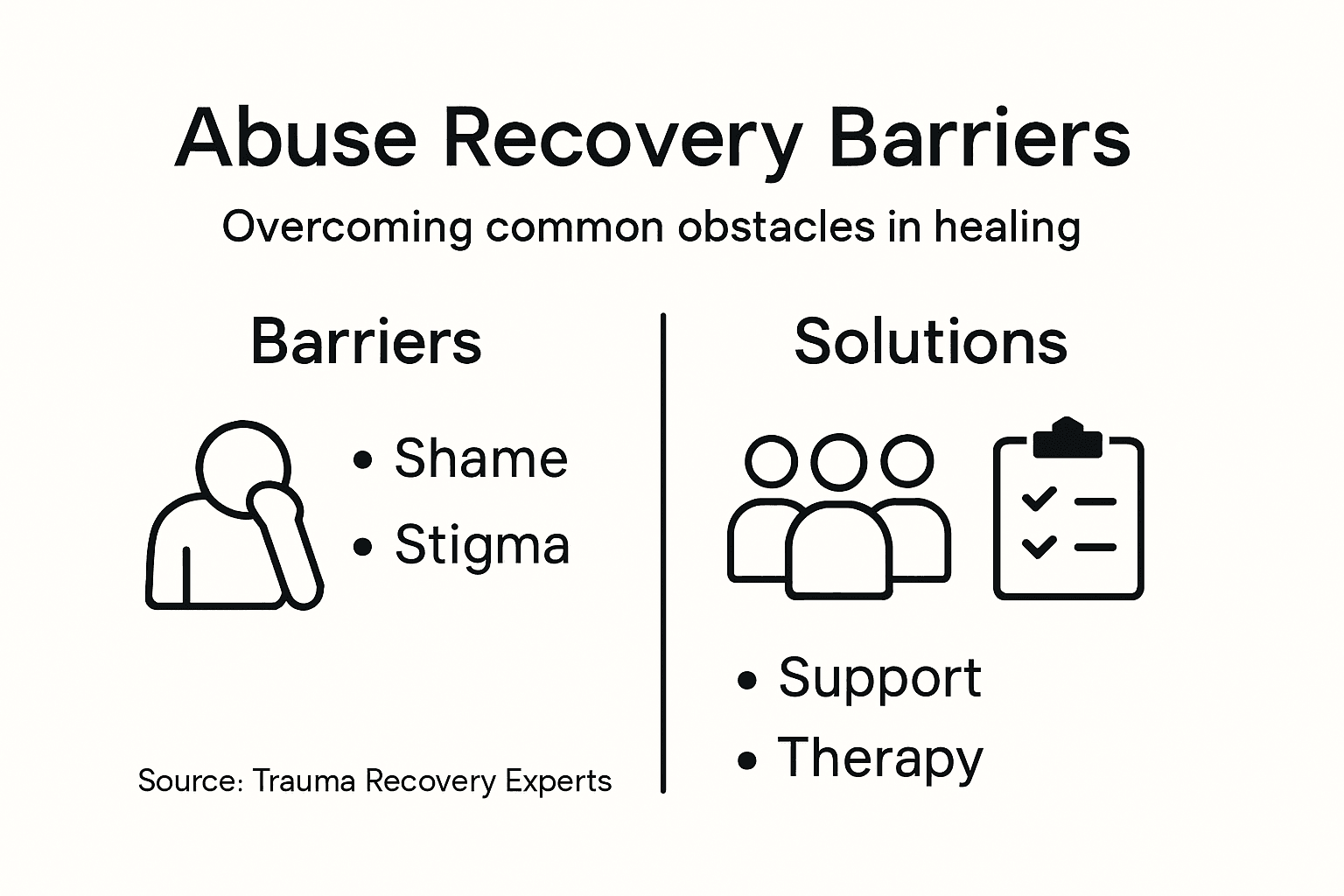
Recovery barriers represent complex psychological, social, and personal challenges that can significantly impede survivors’ healing journeys. Understanding these obstacles is crucial for developing targeted strategies that empower individuals to move beyond traumatic experiences and reclaim their lives.
Common barriers survivors frequently encounter include:
- Shame and Self-Blame: Internalized negative beliefs about the abuse
- Fear of Vulnerability: Resistance to opening up and seeking help
- Financial Constraints: Limited access to professional therapeutic resources
- Social Stigma: Judgment and misunderstanding from external support systems
- Complex Trauma Responses: Deeply ingrained survival mechanisms
Research from addiction treatment centers reveals several critical strategies for overcoming these barriers:
- Developing trauma-informed support networks
- Building financial assistance and sliding-scale therapy options
- Implementing comprehensive mental health education
- Creating safe, non-judgmental therapeutic environments
- Addressing co-occurring mental health challenges
Healing is not about perfection, but about progress and compassionate self-acceptance.
Professional therapeutic interventions play a pivotal role in dismantling these barriers. Trauma-informed approaches recognize that recovery is a nuanced, individualized journey requiring patience, specialized support, and a holistic understanding of each survivor’s unique experiences.
Below is a comparison of common barriers to recovery with strategies that help overcome them:
| Recovery Barrier | Impact on Survivor | Overcoming Strategy |
|---|---|---|
| Shame & Self-Blame | Hinders trust and openness | Compassionate self-talk and support |
| Financial Constraints | Limits treatment access | Sliding scale therapy, grants |
| Social Stigma | Isolation and reduced support | Education and community resources |
| Fear of Vulnerability | Delays seeking help | Safe therapeutic relationships |
| Complex Trauma | Triggers and setbacks | Trauma-informed, phased approaches |
Pro tip: Be gentle with yourself and understand that seeking help is an act of profound courage, not weakness.
Take the Next Step Toward Abuse Recovery with Compassionate Support
Facing the emotional challenges of abuse recovery requires understanding, patience, and the right therapeutic guidance. If you find yourself struggling with feelings of shame, fear, or uncertainty about the healing journey, know that personalized help is available. Our team specializes in trauma-informed therapy designed to empower survivors through every stage of recovery. Explore insights and strategies tailored specifically for those affected by sexual abuse and trauma or entangled in toxic relationship dynamics.
Take control of your healing today by connecting with experienced professionals at Bergen County Therapist. Book a free consultation and begin creating a personalized plan that focuses on rebuilding your emotional strength and reclaiming your life. The first step toward emotional healing is within reach. Reach out now and move forward with hope and confidence.
Frequently Asked Questions
What are the key steps involved in abuse recovery?
Abuse recovery typically involves individual psychotherapy, group support systems, trauma-informed counseling, developing healthy coping mechanisms, and rebuilding personal boundaries.
How long does the recovery process usually take?
The recovery process is not linear and varies for each individual. It’s important to recognize that healing is a gradual journey requiring self-compassion and professional support.
What are the common barriers to abuse recovery?
Common barriers include shame and self-blame, fear of vulnerability, financial constraints, social stigma, and complex trauma responses that can impede healing.
What types of therapies are effective for survivors of abuse?
Effective therapies for abuse survivors include Cognitive Behavioral Therapy (CBT), Eye Movement Desensitization and Reprocessing (EMDR), Dialectical Behavior Therapy (DBT), Somatic Experiencing, and Group Therapy.