

Most people think conflict resolution means either avoiding disagreements entirely or winning every argument. Neither approach actually works. Real conflict resolution involves peaceful processes to solve disputes constructively, not eliminate them. This guide breaks down what conflict resolution truly means, the five core styles you can use, and practical techniques to improve your personal relationships. You’ll discover research-backed methods that transform how you handle disagreements, build stronger connections, and communicate more effectively in every area of your life.
Table of Contents
- Understanding Conflict Resolution: Definitions And Core Concepts
- Conflict Resolution Styles And Methodologies: The Thomas-Kilmann Model Explained
- Effective Conflict Resolution Techniques For Personal Relationships
- Applying Conflict Resolution Styles And Techniques: Research Insights And Best Practices
- Explore Therapy Options To Strengthen Your Conflict Resolution Skills
- Frequently Asked Questions
Key takeaways
| Point | Details |
|---|---|
| Definition clarity | Conflict resolution uses formal or informal processes to reach peaceful solutions, not to avoid or dominate disputes. |
| Five core styles | The Thomas-Kilmann model identifies Avoiding, Accommodating, Competing, Compromising, and Collaborating as key approaches. |
| Effective steps | Success requires active listening, focusing on interests rather than positions, and mutually agreeing on solutions. |
| Personal relationship focus | Collaborating and compromising with empathy produce the strongest outcomes in romantic and family contexts. |
| Flexibility wins | Adapting your style to each situation consistently outperforms rigid adherence to one approach. |
Understanding conflict resolution: definitions and core concepts
Conflict resolution is the informal or formal process that two or more parties use to find a peaceful solution to their dispute. This definition might sound simple, but it carries profound implications for how you approach disagreements in your daily life. The key word here is peaceful, which distinguishes genuine conflict resolution from aggressive confrontation or passive withdrawal.
Many people confuse conflict resolution with conflict avoidance. They’re fundamentally different. Avoidance means pretending problems don’t exist or walking away without addressing underlying issues. Resolution means engaging constructively to find solutions that work for everyone involved. Similarly, conflict resolution isn’t about dominating the other person or proving you’re right. It’s about creating outcomes where both parties feel heard and respected.
Every conflict resolution scenario involves four essential elements. First, you need at least two parties with differing perspectives or goals. Second, there must be a specific dispute or disagreement to address. Third, some kind of process must occur, whether that’s a casual conversation or structured mediation. Fourth, the goal is always a peaceful solution that reduces tension rather than escalating it.
Why does this matter for your personal relationships? Because unresolved conflicts erode trust, create resentment, and damage emotional intimacy over time. When you understand conflict resolution as a skill you can develop, you transform disagreements from relationship threats into opportunities for growth. This applies across multiple contexts:
- Personal relationships where emotional stakes run high and long-term connection matters most
- Workplace situations where professional boundaries require balanced, respectful approaches
- Community interactions where diverse perspectives need integration for collective progress
- Family dynamics where generational differences and deep histories complicate simple solutions
The beauty of conflict resolution is its universality. Once you master core principles, you can apply them anywhere disputes arise. You’re not learning separate skills for different contexts. You’re building fundamental communication and problem-solving abilities that improve every relationship you have.
Conflict resolution styles and methodologies: the Thomas-Kilmann model explained
The Thomas-Kilmann Conflict Mode Instrument identifies five distinct styles: Avoiding, Accommodating, Competing, Compromising, and Collaborating. This framework has dominated conflict resolution training for decades because it accurately captures how people naturally respond to disagreements. Understanding these styles helps you recognize your default patterns and choose more effective approaches.
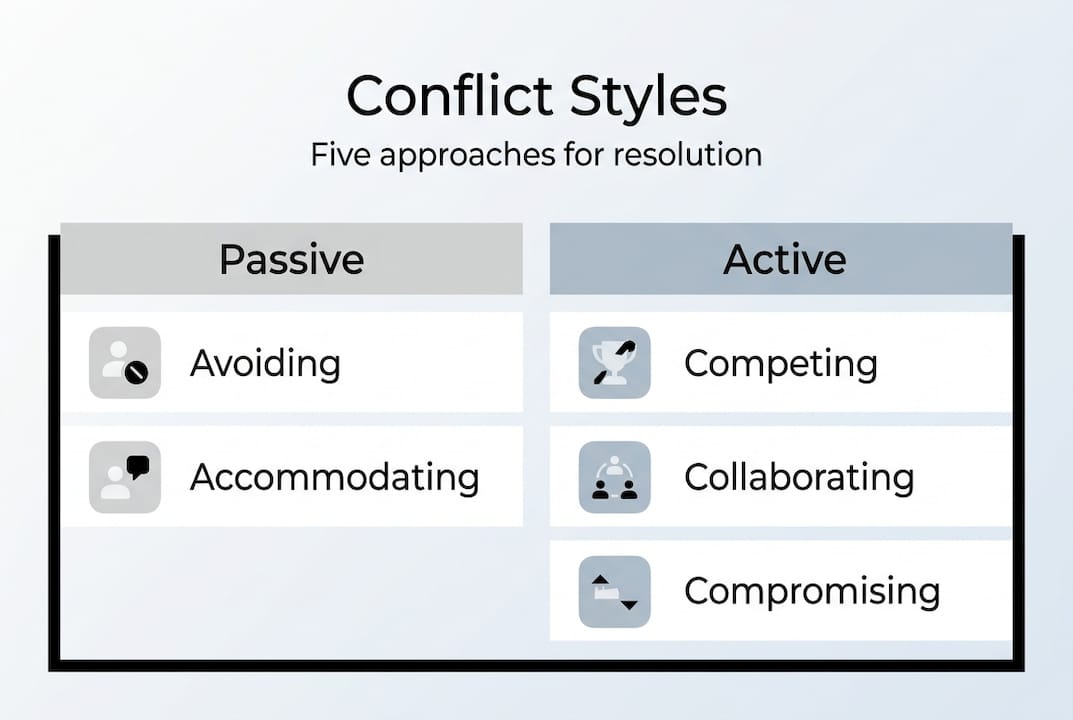
Each style balances two dimensions: assertiveness (pursuing your own concerns) and cooperativeness (satisfying the other person’s concerns). Avoiding scores low on both dimensions. You sidestep the conflict entirely, neither pushing your agenda nor helping the other person. This works well for trivial issues that genuinely don’t matter or when emotions run too hot for productive conversation. Use it sparingly in close relationships where unaddressed problems accumulate.
Accommodating prioritizes the other person’s needs over your own. You’re cooperative but not assertive. This style builds goodwill and works beautifully when the issue matters more to them than to you, or when preserving harmony outweighs winning the specific point. Overuse it and you’ll breed resentment in yourself while teaching others to disregard your needs.
Competing means you pursue your goals assertively without much concern for the other person’s perspective. This style suits emergencies requiring quick decisions or situations where you’re defending important principles. In personal relationships, competing damages trust and creates win-lose dynamics that erode intimacy. Save it for rare circumstances where compromise genuinely isn’t possible.
Compromising seeks middle ground where both parties give up something to reach agreement. You’re moderately assertive and moderately cooperative. This style resolves conflicts quickly when time pressure exists or when both parties have equally important but incompatible goals. The downside? Nobody gets fully satisfied, and creative solutions get overlooked in the rush to split differences.
Collaborating aims for win-win solutions where both parties fully satisfy their concerns. You’re highly assertive about your needs and highly cooperative in understanding theirs. This style takes the most time and emotional energy but produces the strongest outcomes. Use it for important relationships and complex issues where creative solutions can genuinely satisfy everyone.
| Style | Best Used When | Strengths | Limitations |
|---|---|---|---|
| Avoiding | Issue is trivial or emotions too high | Prevents escalation, buys time | Problems fester unresolved |
| Accommodating | Other’s needs outweigh yours | Builds goodwill, preserves harmony | Can breed personal resentment |
| Competing | Emergency or defending principles | Quick decisions, clear boundaries | Damages relationships, creates resentment |
| Compromising | Time pressure or equal importance | Fast resolution, perceived fairness | Nobody fully satisfied, misses creativity |
| Collaborating | Important relationships and complex issues | Maximum satisfaction, creative solutions | Time-intensive, requires high trust |
Pro Tip: Track which style you default to under stress. Most people overuse one or two styles regardless of context. Building flexibility to match your style to each situation dramatically improves your conflict resolution effectiveness.
Effective conflict resolution techniques for personal relationships
Resolving conflicts effectively in personal relationships requires following structured steps while maintaining emotional connection. The process starts with clearly identifying the specific problem without blame or judgment. What exactly are you disagreeing about? Strip away accusations and focus on the concrete issue at hand. Vague complaints like “you never listen” need translation into specific, observable behaviors.
Next, create a safe environment where both people feel comfortable expressing themselves honestly. This means choosing the right time and place, ensuring privacy, and agreeing to avoid interruptions. You can’t resolve conflicts productively when one person feels ambushed or when distractions prevent full attention. Safety also means committing to respectful communication even when emotions intensify.
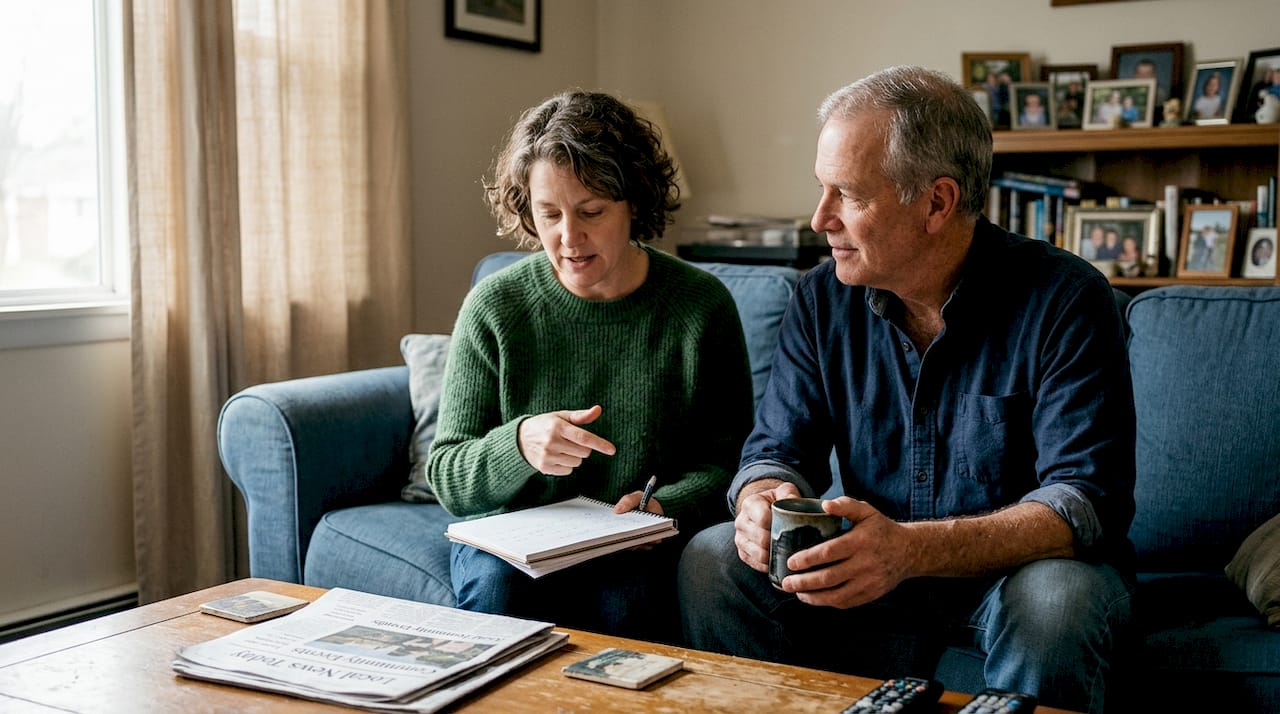
Active listening forms the foundation of every successful resolution. Listen to understand, not to prepare your counterargument. Reflect back what you hear to confirm accuracy. Ask clarifying questions that demonstrate genuine curiosity about their perspective. Most conflicts persist because people feel unheard, not because solutions don’t exist.
Focus on interests rather than positions. Positions are the specific outcomes each person demands. Interests are the underlying needs, fears, or values driving those demands. When you explore interests, creative solutions emerge that satisfy both parties in ways neither initially imagined. A couple arguing about how much time to spend with extended family might discover their real interests involve feeling prioritized and maintaining important connections, leading to solutions neither considered initially.
Explore multiple solutions together before evaluating any single option. Brainstorm freely without criticism. Generate as many possibilities as you can, even impractical ones. This creative phase often reveals unexpected compromises or collaborative approaches. Once you have options, evaluate them together based on how well they serve both people’s core interests.
Agree on the best solution and commit to implementing it. Specificity matters here. Vague agreements like “we’ll communicate better” fail because nobody knows what that means behaviorally. Define exactly what each person will do differently, when they’ll do it, and how you’ll measure progress. Schedule a follow-up conversation to assess whether the solution actually works.
Specific communication techniques strengthen these steps:
- I-Statements express your feelings and needs without blaming the other person, reducing defensiveness and opening dialogue
- DESC Script structures difficult conversations through Describe, Express, Specify, and Consequences for clarity and focus
- Time-Outs allow cooling down when emotions escalate beyond productive conversation, preventing damage from heated exchanges
- Active Empathy involves explicitly acknowledging the other person’s feelings and perspective before presenting your own
- Mediation brings in a neutral third party when you’re stuck in patterns neither can break alone
These techniques work because they address the emotional dimension of conflicts while maintaining focus on practical solutions. You’re not just solving problems. You’re strengthening the relationship through how you solve them. Each successful resolution builds trust and creates positive patterns for future disagreements.
Pro Tip: Prioritize understanding your partner’s perspective over winning the argument. When both people feel genuinely understood, solutions emerge naturally. When either person feels dismissed, even perfect solutions fail because the relationship damage outweighs the practical resolution.
Applying conflict resolution styles and techniques: research insights and best practices
Recent research reveals which conflict resolution approaches actually work in personal relationships. A 2025 study found that quality time and perspective-taking mediate positive conflict resolution while reducing negative patterns. Couples who regularly spend focused time together and actively work to understand each other’s viewpoints resolve disagreements more constructively and experience less relationship distress. This validates what therapists have long observed: conflict resolution skills matter less than the relational foundation supporting them.
The same research highlighted dyadic coping, where partners support each other through stress together rather than individually. Couples who practice dyadic coping report better conflict outcomes because they approach disagreements as shared challenges rather than adversarial battles. This shifts the entire dynamic from me versus you to us versus the problem.
Another fascinating study on mental contrasting showed that couples who mentally contrast their ideal relationship with current obstacles solve problems more effectively. This technique involves vividly imagining your desired outcome, then identifying specific barriers preventing it, then developing concrete action plans. The research also revealed gender differences: women tend to disclose more during problem-solving conversations, while men often jump to solutions faster. Recognizing these patterns helps couples navigate them productively.
Experts emphasize that flexibility across conflict styles consistently outperforms rigid adherence to any single approach. People who assess each situation and consciously choose appropriate styles achieve better outcomes than those who default to habitual patterns. Training in the Thomas-Kilmann model increases this self-awareness, helping you recognize when you’re competing out of habit rather than necessity, or avoiding conflicts that genuinely need addressing.
| Research Finding | Key Insight | Practical Application |
|---|---|---|
| Quality time mediates resolution | Regular focused connection reduces conflict intensity | Schedule weekly uninterrupted time together |
| Perspective-taking reduces negativity | Understanding partner’s view decreases defensive reactions | Practice summarizing their perspective before responding |
| Mental contrasting improves outcomes | Visualizing ideals plus obstacles drives action | Use ideal-obstacle-action framework for major disagreements |
| Dyadic coping strengthens resolution | Approaching stress together builds resilience | Frame conflicts as shared problems to solve jointly |
| Style flexibility beats rigidity | Adapting approach to context improves results | Assess each situation before defaulting to habitual style |
These findings point toward essential best practices for applying conflict resolution in your personal relationships:
- Cultivate empathy as your foundation by genuinely seeking to understand before seeking to be understood
- Develop flexibility by learning all five conflict styles and practicing conscious choice based on context
- Strengthen communication skills through specific techniques like I-Statements and active listening rather than relying on good intentions
- Build relational capital through quality time and positive interactions that create goodwill for navigating disagreements
- Practice dyadic coping by framing conflicts as shared challenges requiring collaborative solutions
- Increase self-awareness about your default patterns and triggers so you can interrupt unproductive habits
Successful conflict resolution in personal relationships depends less on perfect technique and more on the quality of the relationship itself. Invest in connection, practice perspective-taking, and approach disagreements as opportunities to understand each other more deeply.
Cultural context also matters significantly. Different cultures emphasize various conflict styles as appropriate or desirable. Some cultures value direct confrontation and explicit communication, while others prioritize harmony and indirect approaches. Understanding these differences prevents misinterpreting style preferences as personal failings. What looks like avoidance in one cultural context might represent respectful restraint in another.
Pro Tip: Regularly assess your dominant conflict style and consciously practice underused styles in low-stakes situations. This builds flexibility so you have genuine choices when high-stakes conflicts arise. Most people discover they overuse one or two comfortable styles while neglecting others that might serve them better.
Explore therapy options to strengthen your conflict resolution skills
Professional therapy offers powerful support for developing stronger conflict resolution abilities. Whether you’re struggling with recurring relationship patterns or simply want to communicate more effectively, working with a trained therapist accelerates your growth. Different types of psychotherapy address conflict resolution from various angles, helping you understand your patterns and build new skills.
Couples therapy specifically focuses on improving how partners navigate disagreements together. You’ll learn conflict resolution strategies tailored to your unique relationship dynamics. Therapists help you identify destructive patterns, practice healthier communication in real time, and build the emotional safety necessary for productive conflict resolution.

Individual therapy strengthens your personal conflict resolution capacity by addressing underlying issues like anxiety, past trauma, or attachment patterns that influence how you handle disagreements. Understanding yourself more deeply translates directly into better relationship skills. Dr. Oreski & Associates offers comprehensive psychotherapy treatment options both in person and online, making professional support accessible regardless of your schedule or location.
Frequently asked questions
What are common conflict resolution styles used in relationships?
The five main styles are Avoiding, Accommodating, Competing, Compromising, and Collaborating. Most people default to one or two styles, but effective conflict resolution requires flexibility to match your approach to each specific situation and relationship context.
How can I practice conflict resolution at home?
Start with low-stakes disagreements to build skills before tackling major conflicts. Practice active listening by summarizing what you hear before responding. Use I-Statements to express your needs without blame. Focus on understanding your partner’s interests rather than defending your position.
Why is empathy important in conflict resolution?
Empathy transforms conflicts from adversarial battles into collaborative problem-solving. When both people feel genuinely understood, defensiveness decreases and creative solutions emerge. Research shows perspective-taking directly reduces negative conflict patterns and improves relationship satisfaction over time.
When should couples seek therapy for conflict issues?
Seek professional help when conflicts become repetitive without resolution, when discussions consistently escalate into harmful arguments, when one or both partners feel unheard despite efforts to communicate, or when conflicts damage trust and intimacy. Early intervention prevents patterns from becoming entrenched and harder to change.