

Losing a loved one can leave you feeling isolated, even when surrounded by caring friends and family in Bergen County. The pain of grief often seems too heavy to carry alone. Group grief counseling offers a safe space to share your journey with others who truly understand. Supported by evidence-based approaches, group counseling normalizes every emotional response and helps rebuild meaning after loss. Discover how connecting with others in a structured group can guide healing while respecting your comfort and personal boundaries.
Table of Contents
- Core Definition And Myths Of Group Grief Counseling
- Key Types And Formats Of Grief Support Groups
- How Group Counseling Sessions Work
- Notable Benefits And Challenges For Participants
- Risks, Costs, And When To Avoid Groups
Key Takeaways
| Point | Details |
|---|---|
| Group Grief Counseling Offers Shared Support | This approach creates a supportive environment for individuals experiencing similar grief, fostering connection and understanding. |
| Various Support Group Formats Exist | Options include peer-led, professionally facilitated, psychoeducational, and specialized loss groups, each catering to different needs. |
| Benefits and Challenges in Group Counseling | Participants gain emotional validation and coping skills; however, they may face vulnerabilities and discomfort with group dynamics. |
| Not a Universal Solution | Individual readiness and circumstances play a critical role in determining if group grief counseling is appropriate for someone. |
Core Definition and Myths of Group Grief Counseling
Group grief counseling is a structured therapeutic approach designed to help individuals navigate the complex emotional landscape of loss by providing a supportive, shared healing environment. Unlike individual therapy, this approach brings together people experiencing similar grief experiences, creating a powerful network of mutual understanding and emotional support.
The core definition of group grief counseling centers on several key principles:
- Providing a safe, non-judgmental space for emotional expression
- Normalizing diverse grief responses and emotional experiences
- Building coping skills through collective learning and sharing
- Reducing isolation by connecting individuals with similar loss experiences
Research indicates that group grief counseling is rooted in multiple theoretical frameworks that recognize grief as a deeply relational and social experience. By countering cultural stigmas that discourage open emotional expression, these groups help participants gradually disclose their feelings and reconstruct meaning after significant loss.
However, several persistent myths can prevent people from experiencing the transformative power of group grief counseling. Common misconceptions include:
- Participants must share their deepest, most private emotions
- Limited sharing time means insufficient personal attention
- Group counseling is less effective than individual therapy
In reality, group members control their level of disclosure, choosing only to share what feels comfortable. Groups provide flexible environments where observation and reflection are equally valid forms of participation. Contrary to popular belief, group counseling can be as effective—and sometimes more effective—than individual therapy.
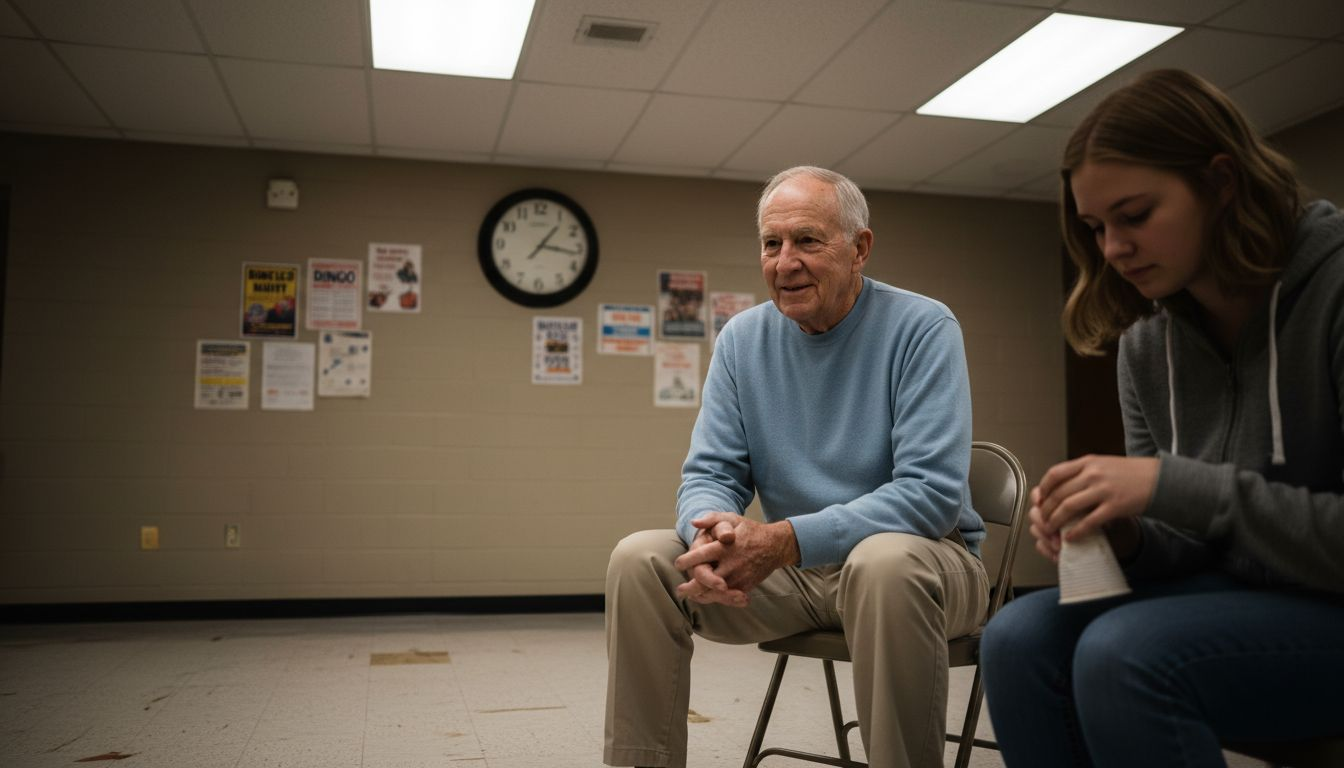
Pro tip: When considering group grief counseling, remember that healing happens at your own pace, and you’re never required to share more than you feel comfortable expressing.
Key Types and Formats of Grief Support Groups
Grief support groups come in diverse formats, each designed to address the unique emotional needs of individuals experiencing loss. Understanding grief therapy techniques reveals a nuanced landscape of support options that cater to different healing approaches and personal preferences.
The primary categories of grief support groups include:
- Peer-led self-help groups: Participant-driven environments with minimal professional facilitation
- Professionally facilitated therapeutic groups: Structured sessions led by mental health professionals
- Psychoeducational groups: Focus on teaching coping skills and providing informational support
- Specialized loss groups: Targeted support for specific types of loss (e.g., child loss, spousal loss)
Research indicates that these groups can be classified into different intervention levels:
- Primary prevention groups: Designed for individuals experiencing normative grief reactions
- Secondary prevention groups: Targeting those at risk of developing complicated grief
- Tertiary prevention groups: Supporting individuals with prolonged or complex grief disorders
Cultural sensitivity plays a crucial role in designing effective grief support groups. Different sociocultural contexts require tailored approaches that respect unique grieving traditions and emotional expression styles. Some groups use narrative therapy techniques, while others incorporate cognitive-behavioral strategies to help participants process their loss.
Here’s a practical comparison of grief support group types and their main characteristics:
| Group Type | Leadership | Focus Area | Typical Participants |
|---|---|---|---|
| Peer-led self-help | Non-professional peers | Emotional sharing | People seeking shared support |
| Professionally facilitated | Mental health experts | Structured emotional healing | Those desiring guidance |
| Psychoeducational | Clinicians or educators | Coping skills and education | Learners seeking strategies |
| Specialized loss | Trained facilitators | Specific loss (e.g., child) | Individuals with similar loss |
Grief support is not one-size-fits-all. The most effective group is one that resonates with your personal healing journey and emotional needs.
Pro tip: When selecting a grief support group, prioritize finding a format that feels comfortable and aligns with your personal grief processing style.
How Group Counseling Sessions Work
Group grief counseling sessions are carefully structured therapeutic experiences designed to provide meaningful support and healing for individuals navigating loss. Group counseling benefits reveal a powerful approach to emotional recovery that goes beyond traditional individual therapy.
A typical group counseling session follows a systematic framework with several key components:
- Opening ritual: Establishing a safe, welcoming environment
- Check-in process: Participants share current emotional states
- Guided discussion: Exploring grief-related themes and experiences
- Skill-building activities: Learning coping mechanisms
- Reflection and closure: Processing session insights
The session dynamics involve multiple therapeutic stages:
- Initial formation: Building group trust and establishing ground rules
- Exploration phase: Sharing personal grief experiences
- Working phase: Developing collective and individual coping strategies
- Termination phase: Consolidating learning and planning future healing
Professional facilitators play a crucial role in guiding these sessions, ensuring a supportive and productive environment. They skillfully manage group interactions, encourage balanced participation, and provide expert guidance without dominating the conversation.
Group counseling transforms individual pain into collective healing, creating a powerful network of mutual understanding and support.
Pro tip: Arrive with an open mind and remember that listening can be just as healing as speaking in group counseling sessions.
Notable Benefits and Challenges for Participants
Participating in group grief counseling presents a complex landscape of potential benefits and inherent challenges that individuals must navigate carefully. Group therapy for trauma illustrates how shared experiences can transform individual pain into collective healing.
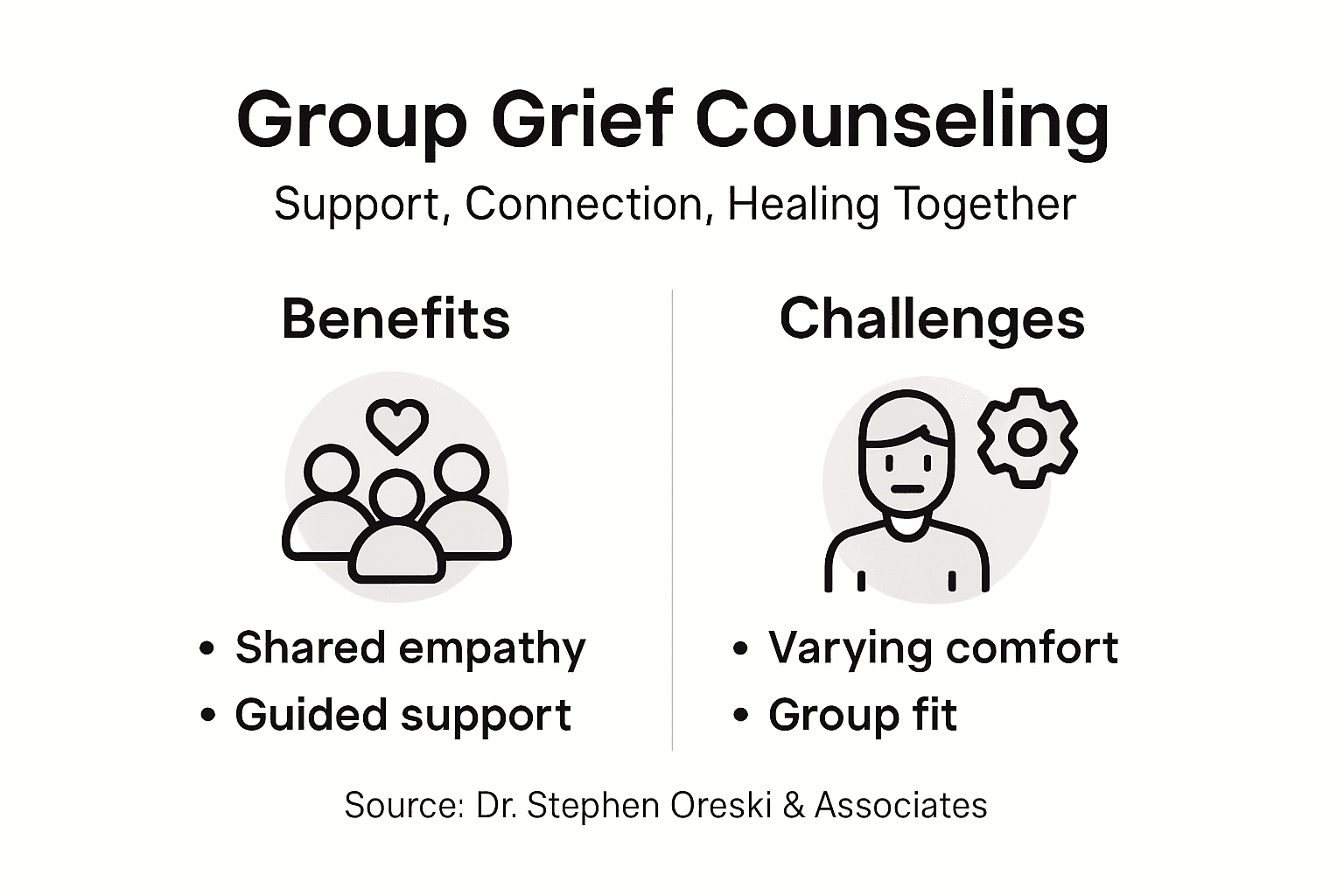
The most significant benefits of group grief counseling include:
- Emotional validation: Experiencing shared grief responses
- Social connection: Reducing isolation and loneliness
- Coping skill development: Learning practical emotional management strategies
- Normalized grief experience: Understanding grief’s universal nature
- Peer support: Creating a network of understanding individuals
However, participants also encounter several potential challenges:
- Emotional vulnerability in group settings
- Potential triggering of intense grief reactions
- Variability in individual grief processing speeds
- Discomfort with public emotional expression
- Differing comfort levels with group participation
Research indicates that the effectiveness of group grief counseling depends significantly on professional facilitation and participants’ individual readiness. Skilled facilitators create safe environments that mitigate challenges while maximizing therapeutic potential, helping participants feel supported throughout their healing journey.
Not every group will feel right, and that’s okay. Healing is a personal journey with multiple valid paths.
Pro tip: Give yourself permission to try multiple groups and leave if the environment doesn’t feel supportive or comfortable for your healing process.
Risks, Costs, and When to Avoid Groups
While group grief counseling offers powerful healing opportunities, it is not a universal solution for everyone experiencing loss. Does group therapy work effectively depends on individual circumstances, emotional readiness, and specific grief experiences.
Potential risks of participating in group grief counseling include:
- Emotional overwhelm: Intense triggering of personal grief reactions
- Retraumatization: Potential reopening of unresolved emotional wounds
- Inappropriate group dynamics: Interactions that might impede individual healing
- Comparison syndrome: Unhealthy comparisons of grief experiences
- Premature emotional exposure: Sharing before feeling psychologically prepared
Certain individuals should carefully consider or potentially avoid group grief counseling:
- People with severe, unmanaged mental health conditions
- Individuals experiencing acute traumatic grief
- Those unable to regulate intense emotional responses
- Persons requiring highly specialized therapeutic interventions
- Individuals uncomfortable with group settings
Financial and time costs represent additional considerations for participants. Group sessions typically involve monetary expenses, consistent time commitments, and emotional investments that might not align with everyone’s personal resources or healing preferences.
This summary highlights when group grief counseling is or is not likely to meet individual needs:
| Situation | Group Counseling Fit | Alternative Recommendation |
|---|---|---|
| Mild to moderate grief | Often beneficial | Supportive friends, self-help |
| Complicated or traumatic grief | Sometimes insufficient | Individual therapy recommended |
| Discomfort in group settings | May hinder progress | One-on-one sessions preferred |
| Need for specialized therapy | Not always appropriate | Specialized clinical intervention |
Not all grief journeys follow the same path. Recognizing when group therapy might not serve you is as important as knowing when it can help.
Pro tip: Consult a mental health professional to assess your individual readiness and appropriateness for group grief counseling before committing to a program.
Discover Healing Through Group Grief Counseling
If you are facing the challenge of navigating loss and feeling overwhelmed by grief, group grief counseling offers a path toward shared support and emotional validation. This approach creates a safe space where you can express your feelings, connect with others who understand your experience, and build coping skills together. The article highlights common concerns like emotional vulnerability and the fear of not receiving enough personal attention, but also shows that healing in a group setting happens at your own pace with professional guidance.

Explore our Group Therapy for Healing and Growth – Dr. Stephen Oreski & Associates to find supportive environments tailored to your comfort and needs. To deepen your understanding of grief and find personalized options, visit our Grief Archives – Dr. Stephen Oreski & Associates. Take your first step now by scheduling a free consultation at https://bergencountytherapist.com where our caring team can help you create a treatment plan suited to your unique grief journey.
Frequently Asked Questions
What is group grief counseling?
Group grief counseling is a structured therapeutic approach where individuals experiencing similar loss come together to share their feelings, learn coping skills, and provide mutual support in a safe environment.
How do group grief counseling sessions typically work?
Sessions usually start with an opening ritual to create a welcoming space, followed by a check-in process where participants share their emotional states, guided discussions on grief-related themes, activities for skill-building, and reflections for closure.
What are the main types of grief support groups?
Grief support groups can be categorized into peer-led self-help groups, professionally facilitated therapeutic groups, psychoeducational groups focused on coping strategies, and specialized loss groups for specific types of loss.
What are the potential risks of participating in group grief counseling?
Potential risks include emotional overwhelm, retraining unresolved wounds, inappropriate group dynamics, unhealthy comparisons of grief experiences, and premature emotional exposure before individuals are ready to share their feelings.
Recommended
- Understanding Grief Therapy: Healing Through Loss – Dr. Stephen Oreski & Associates
- What Is Grief Counseling? Complete Expert Guide – Dr. Stephen Oreski & Associates
- Grief Counseling NJ | Bergen County Therapy & Counseling | Paramus NJ
- How to Find Grief Therapist: Step-by-Step Guide for Adults
- 7 Best Senior Relocation Best Practices for Loved Ones