

Finding the right trauma therapy can feel overwhelming when healing feels urgent. Bergen County offers a wide network of compassionate professionals ready to support people at every stage of recovery. Understanding your own readiness for trauma therapy helps you move forward with confidence and choose a treatment that truly fits your needs. This guide breaks down each step so you can start your healing journey with clarity, safety, and genuine support.
Table of Contents
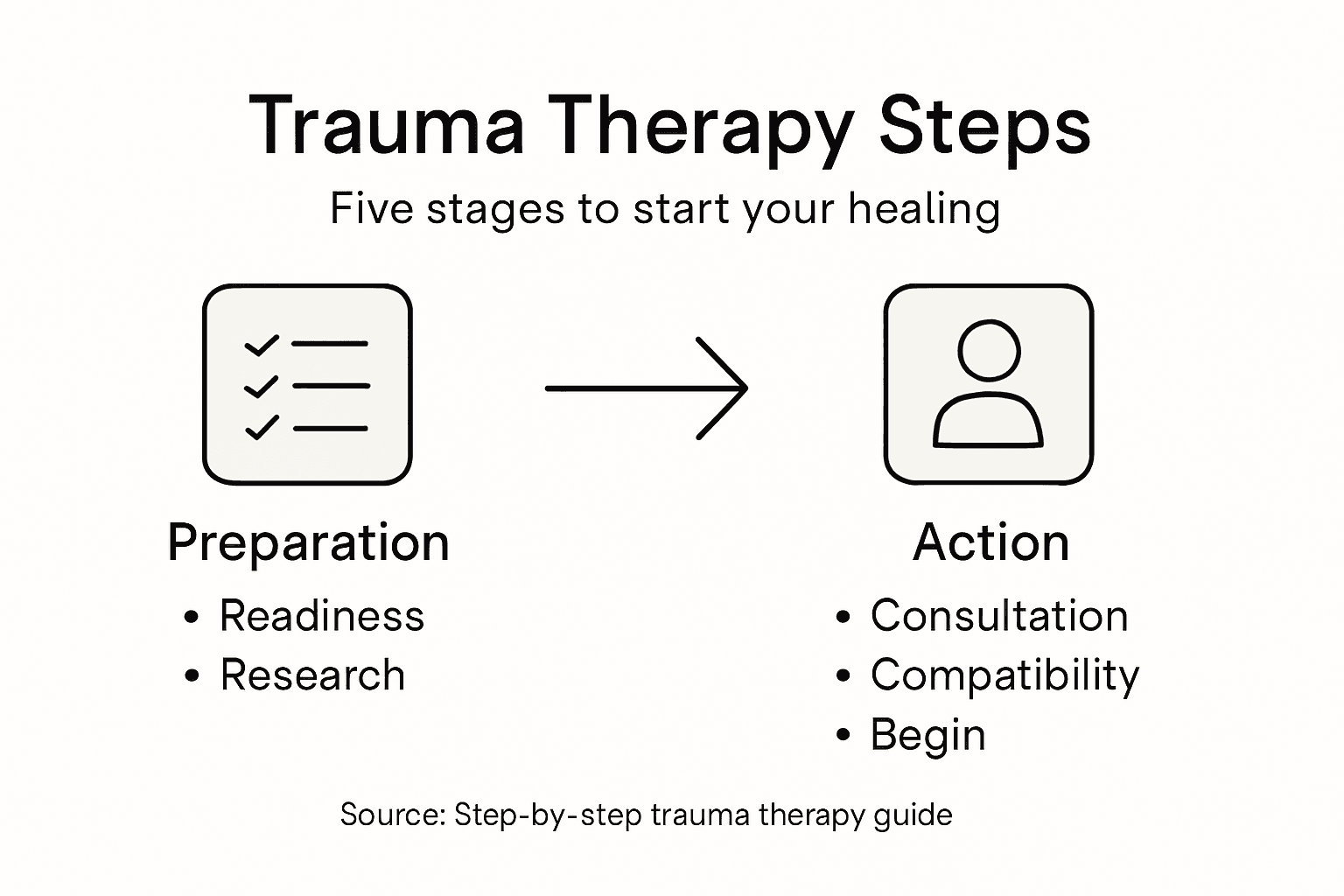
- Step 1: Assess Your Readiness for Trauma Therapy
- Step 2: Research and Select Qualified Therapists
- Step 3: Schedule a Consultation and Prepare Questions
- Step 4: Verify Therapist Compatibility and Treatment Plan
- Step 5: Begin Your Trauma-Focused Healing Journey
Quick Summary
| Key Insight | Explanation |
|---|---|
| 1. Assess your readiness for therapy | Honestly evaluate your mental and emotional state before starting trauma therapy to ensure you’re prepared for the process. |
| 2. Choose a qualified therapist | Look for therapists with specific trauma training and credentials to ensure they are well-equipped to help you. |
| 3. Schedule a thoughtful consultation | Use initial meetings to ask key questions and assess if therapists align with your therapeutic goals and comfort levels. |
| 4. Confirm therapist compatibility and treatment plan | Ensure mutual trust and understanding regarding the treatment plan to promote a stronger therapeutic alliance. |
| 5. Engage authentically in therapy | Approach sessions with willingness and openness, focusing on building safety and stability before deeper issues arise. |
Step 1: Assess Your Readiness for Trauma Therapy
Before starting trauma therapy, you need to honestly evaluate whether you’re mentally and emotionally prepared for the work ahead. This step is about understanding your current state so you can move forward with confidence.
Readiness for trauma therapy involves three key areas. First, examine your willingness to engage in the therapeutic process. Are you ready to show up consistently and participate actively? Second, consider your motivation for change. Do you genuinely want to heal, or are you being pressured by others? Third, assess your capacity to tolerate discussing difficult memories and processing painful emotions.
Start by asking yourself these important questions:
- Do I feel safe enough right now to begin exploring my trauma?
- Am I willing to commit time and energy to therapy sessions?
- Do I have basic stability in my life (housing, safety, support)?
- Am I motivated by my own desire to heal, not someone else’s expectations?
- Can I handle uncomfortable emotions that may arise during sessions?
Stability matters more than you might think. If you’re currently in crisis, experiencing severe substance use, or in an unsafe situation, these need attention first. Trauma therapy works best when you have a foundation to build from. This doesn’t mean you must be perfect or fully healed already, but basic safety and stability help significantly.
The research shows that ongoing assessment of readiness is actually normal. Your readiness may shift as therapy progresses. Some days you’ll feel ready, other days you’ll doubt yourself. This is completely natural. A skilled trauma therapist will continuously check in with you about how you’re doing and adjust the pace accordingly.
Think about your support system too. Do you have at least one person you can talk to about your therapy journey? This could be a trusted friend, family member, or even an online support community. Having connection outside therapy strengthens your healing capacity.
Your readiness isn’t about being “fixed” before you start—it’s about being honest with yourself about where you are right now and committing to the process.
Once you’ve assessed yourself honestly, you’re ready to move forward. The next step involves learning more about what trauma therapy actually looks like so you can choose the right approach.
Pro tip: Write down your answers to those readiness questions and bring them to your first consultation—this self-awareness will help a therapist tailor treatment specifically to your needs and pace.
Step 2: Research and Select Qualified Therapists
Now that you’ve assessed your readiness, it’s time to find a therapist who specializes in trauma and has the right training for your needs. This step is about doing your homework to identify qualified professionals in Bergen County.

Start by looking for therapists trained in evidence-based trauma therapies. The most effective approaches include Cognitive Processing Therapy (CPT), Prolonged Exposure (PE), and Eye Movement Desensitization and Reprocessing (EMDR). These aren’t just buzzwords—they’re specifically designed to help your brain process trauma safely.
Here is a comparison of common evidence-based trauma therapy modalities:
| Therapy Type | Core Method | Best For |
|---|---|---|
| EMDR | Eye movement with trauma recall | PTSD, single incidents |
| CPT | Restructuring trauma-related thoughts | Combat, abuse survivors |
| PE | Gradual exposure to traumatic memories | Chronic PTSD, phobias |
| Trauma-Focused CBT | Cognitive therapy plus trauma focus | Children, adolescents |
When researching potential therapists, focus on these key credentials:
- Licensed clinical social worker (LCSW), licensed professional counselor (LPC), or psychologist
- Specific training certifications in trauma therapy modalities
- Years of experience working with trauma survivors
- Board certification or membership in professional organizations like ISSTD or ISTSS
- Willingness to answer your questions about their approach and experience
Location and accessibility matter too. Do you prefer in-person sessions in Bergen County, or would online therapy work better for your schedule? Some therapists offer both options. Think about practical factors like office hours, parking, and whether your insurance is accepted.
Don’t hesitate to call and ask questions before booking. A good therapist expects this. Ask about their experience with your specific type of trauma, their theoretical approach, and how they handle crisis situations. Their willingness to talk with you beforehand is itself a positive sign.
A qualified trauma therapist should make you feel safe and heard, even in your initial consultation.
You can search therapist directories online or get referrals from your primary care doctor. Many trauma-specialized directories let you find a trauma therapist by location and specialty to narrow down your options quickly.
Pro tip: Schedule consultations with 2-3 therapists before deciding—most offer free initial calls, and finding the right fit matters more than rushing into the first available appointment.
Step 3: Schedule a Consultation and Prepare Questions
The initial consultation is your chance to meet a potential therapist and see if you’re a good match. This step involves scheduling that first meeting and walking in prepared with thoughtful questions.
Most therapists offer free or low-cost initial consultations, either by phone or video. This is your opportunity to assess whether their approach aligns with your needs and whether you feel comfortable working with them. Don’t skip this step thinking you’ll just work with the first available person.
When you call to schedule, mention that you’re looking to discuss trauma therapy. This helps the therapist prepare and block appropriate time. Ask if the consultation will be phone, video, or in-person so you can plan accordingly.
Now prepare your questions. These should cover the essential details about the therapist and their approach:
- How many years have you worked with trauma survivors?
- What specific trauma therapy modalities do you use (EMDR, CPT, PE, etc.)?
- How do you structure sessions and what can I expect in a typical week?
- How do you ensure safety and manage the pace of trauma processing?
- What are your fees, and do you accept my insurance?
- How do you handle crisis situations between sessions?
- What is your approach to treatment goals and progress monitoring?
Bring a list of these questions to your consultation. Writing them down shows you’re serious and helps you remember everything. You might be nervous during the conversation, so having notes is practical.
Pay attention to how the therapist responds. Do they listen carefully to your concerns? Do they explain their approach in ways you understand? Do they ask about your specific trauma history and what you hope to achieve? Good therapists treat the consultation as the beginning of collaborative work.
Your comfort and sense of safety with a therapist matters as much as their credentials.
After the consultation, take time to reflect before committing. You might want to prepare for your first counseling session by thinking about what you want to focus on initially.
Pro tip: Take brief notes during your consultation about what stood out—both positive and concerning—so you can remember details clearly when deciding between therapists.
Step 4: Verify Therapist Compatibility and Treatment Plan
Before committing to therapy, you need to confirm that the therapist is the right fit and that their proposed treatment plan addresses your specific needs. This step ensures you’re making an informed decision.
Therapist compatibility goes beyond just “liking” someone. It’s about trust, clear communication, and shared understanding of your therapy goals. Research shows that the strength of the therapeutic alliance—the working relationship between you and your therapist—significantly impacts treatment success.
Evaluate compatibility by considering these factors:
Below is a summary of what strong therapist-client compatibility involves:
| Compatibility Factor | Why It Matters | Impact on Therapy |
|---|---|---|
| Trust | Enables vulnerability | Promotes honest sharing |
| Communication Style | Reduces misunderstandings | Clarifies goals and progress |
| Flexibility | Adapts to client needs | Prevents therapy roadblocks |
| Shared Values | Aligns expectations | Increases session effectiveness |
- Do you feel heard and understood when you speak with them?
- Do they explain their approach in language you comprehend?
- Do they ask detailed questions about your specific trauma and symptoms?
- Do you feel respected and safe expressing your concerns?
- Are they willing to adjust their approach if something isn’t working?
- Do their values and communication style align with yours?
Now examine the proposed treatment plan. A good plan should be tailored to your situation, not a generic script. Ask the therapist to walk you through what the first few weeks will look like, what techniques they’ll use, and how they’ll measure progress.
The therapist should explain how they’ll manage pacing and safety. Trauma processing can be intense, so understanding how they’ll prevent you from becoming overwhelmed is critical. They should discuss crisis protocols and what to do between sessions if you struggle.
Don’t accept a vague treatment plan. You deserve specifics about frequency, expected duration, and measurable goals. If something feels unclear or uncomfortable, ask more questions. This is your healing journey, and you have the right to understand exactly what you’re signing up for.
A strong therapeutic alliance—built on trust and clear communication—is fundamental to healing from trauma.
Understanding the role of therapists in your healing helps you know what to expect from this partnership.
If after one or two sessions you still have doubts, it’s perfectly acceptable to try a different therapist. The fit matters that much.
Pro tip: Request a written summary of your treatment goals and planned approach after your first session—this document becomes your reference point and helps track progress over time.
Step 5: Begin Your Trauma-Focused Healing Journey
You’ve done the preparation work. Now it’s time to actually start therapy and engage with the healing process. This step is about showing up authentically and understanding what to expect in those first sessions.
Remember that beginning trauma therapy doesn’t require fearlessness. It requires willingness and hope. You’re not expected to be ready for everything immediately. The first phase of trauma therapy focuses on establishing safety and stabilization before diving into deeper processing.
Your therapist will likely spend initial sessions building your therapeutic alliance and teaching foundational skills. This phase includes creating emotional safety, developing self-regulation techniques, and helping you understand how trauma affects your brain and body. These aren’t distractions from “real” therapy—they’re essential groundwork.
Expect these early session components:
- Detailed assessment of your trauma history and current symptoms
- Psychoeducation about trauma responses and your specific diagnosis
- Introduction to grounding and coping strategies you can use immediately
- Discussion of your goals and what healing looks like for you
- Establishing safety plans for between-session difficulties
Bring your complete medical history to your first appointment, including any medications and previous mental health treatment. Be honest about what’s happened to you and how it’s affecting your life. Therapists have heard it all and won’t judge you.
You might feel vulnerable or emotional in these early sessions. This is normal and actually indicates you’re engaging authentically. Your therapist will pace the work according to your capacity. Some weeks will feel harder than others, and that’s expected.
Starting therapy is an act of courage and self-compassion, not weakness.
Examining examples of trauma therapy approaches can help you understand what your sessions might look like.
Between sessions, practice the coping skills your therapist teaches. Keep notes about what helps and what doesn’t. This feedback helps your therapist adjust the approach to work better for you.
Pro tip: Set a consistent day and time for your therapy appointments so it becomes part of your routine, and commit to attending even on weeks when you’re tempted to skip.
Take the First Step Toward Your Healing Journey with Expert Trauma Support
Starting trauma therapy can feel overwhelming but having the right guidance makes all the difference. This article emphasized the importance of assessing your readiness, finding therapists trained in trauma-focused therapies like EMDR and CPT, and building trust through a strong therapeutic alliance. You are not alone in facing difficult emotions or uncertainty about where to begin. Healing starts with honest self-awareness and connecting to professionals who understand how to support you safely.

If you are ready to explore personalized trauma therapy in Bergen County, visit Trauma / PTSD Archives – Dr. Stephen Oreski & Associates to learn more about effective treatment options. Our compassionate team at bergencountytherapist.com offers free consultations to help you find the right approach tailored to your situation. Don’t wait to start building safety and hope. The first step is simple and can transform your path to lasting recovery. Reach out today and discover how expert trauma therapy can make a positive difference.
Frequently Asked Questions
What should I consider before starting trauma therapy?
Before beginning trauma therapy, evaluate your mental and emotional readiness. Ask yourself important questions about your safety, commitment, stability, motivation to heal, and your ability to handle difficult emotions, and then reflect on your answers to gain insight.
How do I find a qualified trauma therapist?
Search for therapists who specialize in evidence-based trauma therapies, such as Eye Movement Desensitization and Reprocessing (EMDR) or Cognitive Processing Therapy (CPT). Create a list of potential therapists and reach out to them with specific questions about their experience and approach.
What questions should I ask during my initial consultation with a therapist?
During your consultation, ask about their experience with trauma survivors, the specific therapy modalities they use, and how they structure their sessions. Prepare a list of questions to ensure you understand their methods and feel comfortable discussing your trauma.
How can I evaluate if the therapist is the right fit for me?
Assess if you feel heard, understood, and respected during your conversations with the therapist. Consider their communication style and flexibility; if it aligns with your needs and makes you feel safe, it’s a positive sign of compatibility.
What should I expect in the first sessions of trauma therapy?
Expect initial sessions to focus on establishing safety and building a therapeutic alliance. Your therapist will likely assess your trauma history, provide psychoeducation, and introduce coping strategies to prepare you for deeper processing.
How can I stay engaged in the therapy process?
Commit to a consistent therapy schedule and practice the coping skills you learn between sessions. Keep notes on what helps you and share this feedback with your therapist to ensure that the approach remains effective as you progress.